NASA Artemis II Rocket Launch May Have Disturbed GPS Signals
Latest Updates





visionaries Network Team
06 November, 2026
telecommunication and electronics
NASA Artemis II rocket launch may have disturbed Earth's ionosphere, raising concerns about GPS navigation accuracy and possible signal disruption
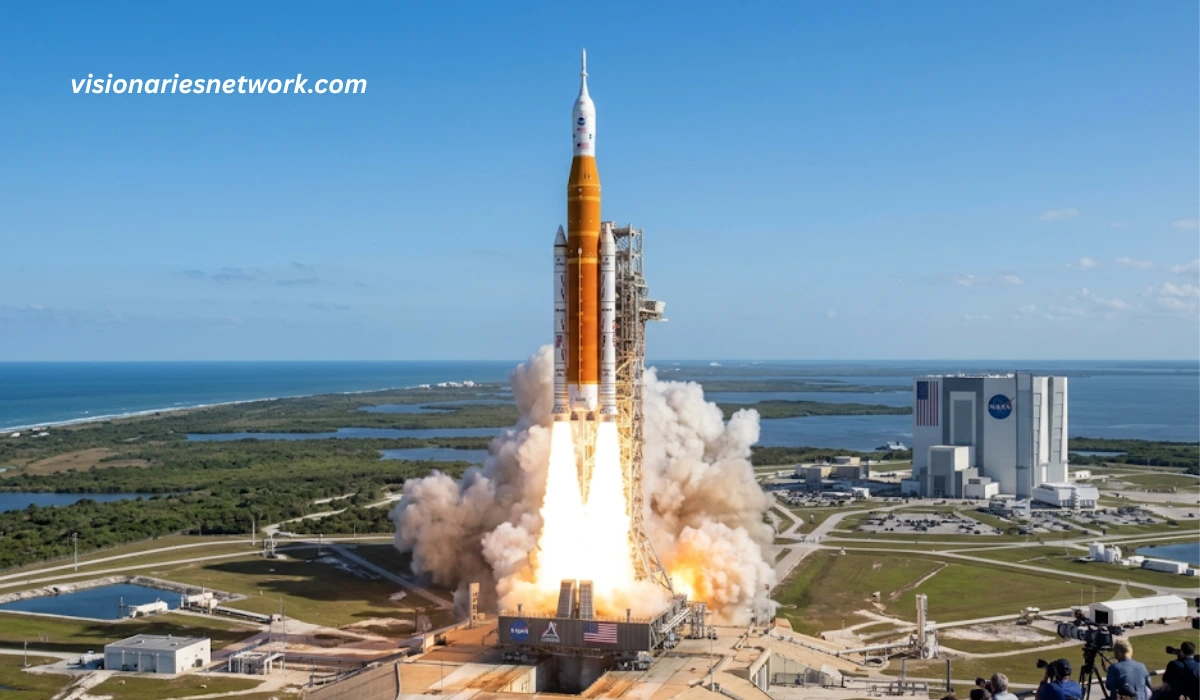
NASA's Artemis II mission took four astronauts on a journey around the Moon. But scientists have now pointed to something unusual that happened during the rocket's flight. The launch appears to have disturbed a part of Earth's upper atmosphere, which could have consequences for satellite navigation. Researchers are examining the possible effects of the NASA Artemis II rocket launch on GPS technology.
Rocket Exhaust Left Changes in the Ionosphere
The area under study is the ionosphere, a part of the upper atmosphere that contains electrically charged particles. GPS signals pass through this region as they travel from satellites to receivers on Earth. When the concentration of these particles’ changes, it can affect the signals before they reach their destination.
Researchers at Taiwan's National Cheng Kung University studied readings from ground-based GPS monitoring stations following the Artemis II launch on April 1, 2026. They found areas where the number of electrons had fallen below normal levels. These temporary changes are known as ionospheric holes.
The disturbances reportedly covered an area stretching about 3,100 miles across North America, according to Space.com.
The researchers also noticed something interesting about the rocket's engine activity. Two engine burns carried out at an altitude of around 115 miles produced stronger disturbances than the initial launch. The exhaust released during these burns interacted with the ionosphere, changing the concentration of charged particles.
What This Could Mean for GPS Users
Changes in the ionosphere matter because GPS receivers rely on signals arriving at very precise times. Even a small change in the time taken by a signal to reach the ground can affect the position calculated by a receiver. This is where concerns about GPS navigation accuracy come in.
The researchers estimated that the atmospheric changes could lead to positioning errors of several metres. This may be worth examining for technologies such as drones and self-driving cars, where accurate location data is important.
That does not mean these systems have stopped working. There have been no confirmed reports of accidents, navigation failures or other real-world problems connected to the Artemis II launch.
Findings Need Further Scientific Review
The research raises questions about whether powerful rocket launches can affect satellite navigation beyond the launch period itself. With more space missions planned, scientists may need to pay closer attention to these atmospheric changes.
However, the study is still a preliminary preprint and has not undergone formal peer review. Its findings need to be examined by other scientists before firm conclusions can be drawn about the extent of GPS signal disruption.
NASA's official Artemis II mission page provides details of the flight, which ended with the crew's safe return to Earth on April 10, 2026.
For now, researchers have identified an unusual effect of the mission, but whether it poses a practical problem for people using GPS remains unanswered.
FAQs
1. What did the Artemis II rocket launch do to Earth's atmosphere?
The launch appears to have created temporary gaps in the ionosphere, where the concentration of electrically charged particles became lower than normal.
2. Why is the ionosphere important for GPS?
GPS signals pass through the ionosphere on their way from satellites to receivers. Changes in this region can affect how long the signals take to reach the ground.
3. Could the Artemis II launch affect GPS navigation accuracy?
The research suggests that the atmospheric changes could cause positioning errors of several metres. However, actual GPS failures have not been confirmed.
4. Could drones and self-driving cars be affected?
These technologies depend on accurate positioning data. Significant GPS errors could affect their navigation, although no related incidents have been reported.
5. Are the findings about GPS signal disruption confirmed?
Not yet. The research is preliminary and has not completed peer review. Further studies are needed to establish the actual impact.
Browse our most recent publications