Industrial Cybersecurity Concerns Rise After French Blood Storage Hacks
Latest Updates





visionaries Network Team
05 November, 2026
cybersecurity
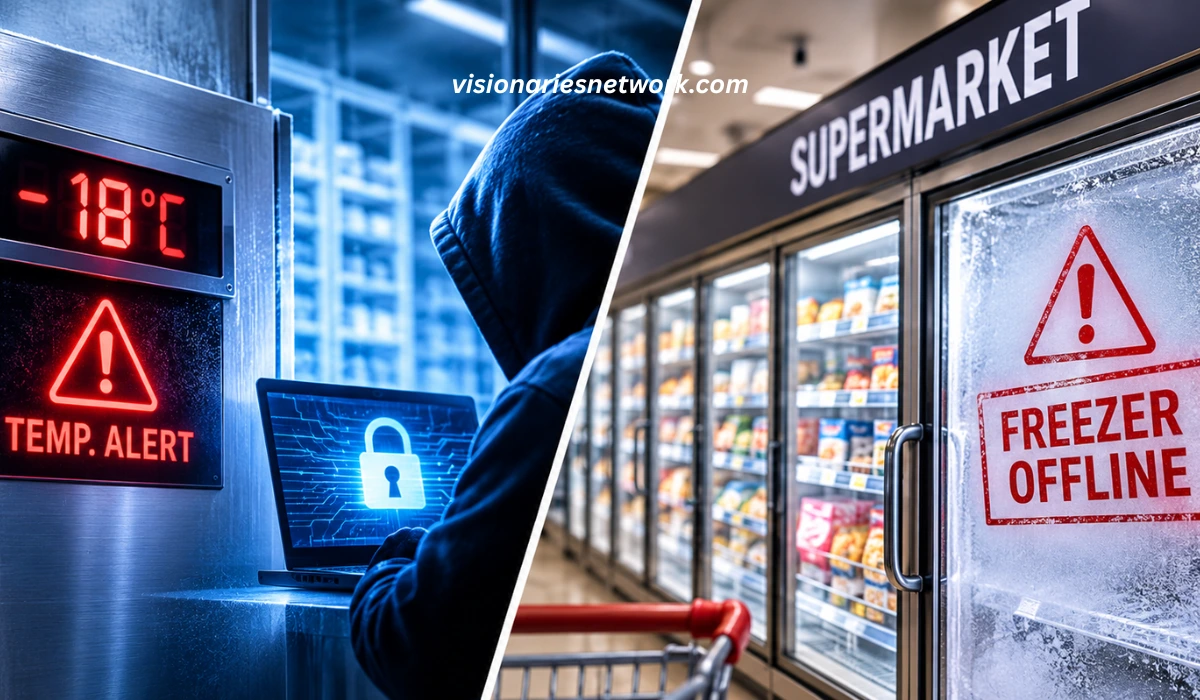
Industrial cybersecurity comes under scrutiny after freezer hacks affect French blood storage facilities and supermarkets across Europe
Cyberattacks on refrigeration equipment in Europe have spread beyond supermarkets, with France's national blood service confirming that hackers affected systems used to store donated blood. The incident has brought industrial cybersecurity into focus as concerns grow over the safety of connected equipment used in healthcare and other essential services.
The French Blood Establishment (EFS) said hackers accessed cold rooms used to store blood products and changed temperature settings. Staff intervened after detecting the changes, preventing damage to the supplies. No blood products were lost, and the organisation reported no health impact.
Until this incident came to light, the attacks were mainly associated with supermarkets in several European countries, where hackers remotely changed freezer settings and caused food to spoil.
Freezer Attacks Spread Across European Countries
The attacks have affected supermarkets in multiple European countries. Investigators believe the latest wave involved several systems being targeted within a short period.
Cybersecurity researchers have been examining how the intrusions took place. One concern is that attackers may have identified internet-facing refrigeration systems before choosing their targets.
Ryan Dewhurst of Spanish cybersecurity firm Previdian said the simultaneous changes to freezer settings suggested planning and coordination. He also pointed to the timing of the attacks, with temperature changes reportedly taking place overnight when fewer staff would be available to respond.
A BBC investigation reported that researchers from three cybersecurity companies have deployed honeypots, or digital traps, to study the attackers' methods.
Researchers Examine Possible Sources of the Attacks
The identity of the attackers remains uncertain. Russian hacktivist groups Noname057(16) and Z-Pentest Alliance claimed to have hacked Danfoss, a company that makes refrigeration control equipment. Their statements prompted speculation about a possible connection to the freezer incidents.
However, cybersecurity researchers have questioned whether these claims establish responsibility for the attacks.
French cybersecurity company Sekoia has also examined possible links to Russian and Iranian actors. Its findings point to previous incidents involving similar equipment, including attacks on Israeli supermarkets in 2022.
The company has cautioned against drawing conclusions from online claims. It told the BBC that it had no technical evidence linking Russian-speaking groups to the incidents and remained sceptical of the claims made by Noname057(16).
Weak Security in Connected Equipment Under Scrutiny
The incidents have drawn attention to security gaps in connected equipment. Guidance from the National Institute of Standards and Technology (NIST) outlines security practices for operational technology used in industrial environments.
Researchers say some affected refrigeration systems were poorly protected, with known methods of exploiting them already available online. These cybersecurity vulnerabilities may allow attackers to access equipment that has not been properly secured.
The Cybersecurity and Infrastructure Security Agency (CISA) publishes security advisories covering vulnerabilities in industrial control systems.
Refrigeration systems are also used in hospitals, laboratories and blood banks, where stable temperatures are essential. Researchers are investigating how hackers found vulnerable devices and whether different groups carried out the attacks.
Authorities in several countries are investigating the incidents and warning supermarkets about further risks. No group has been officially identified as responsible.
FAQs
1. What happened to France's blood storage facilities?
Hackers accessed refrigeration control systems at facilities operated by the French Blood Establishment and changed temperature settings. Staff intervened before any blood products were lost.
2. Which countries have experienced freezer cyberattacks?
Several European countries have reported attacks on supermarket refrigeration equipment. Similar incidents have also been reported in the United States and Israel.
3. Are Russian hackers responsible for the freezer attacks?
Their involvement has not been established. Russian hacktivist groups have made claims, but researchers say there is not enough technical evidence to confirm responsibility.
4. What role does Danfoss play in the investigation?
Danfoss manufactures refrigeration control equipment. Its systems have been mentioned in connection with the attacks, but claims of responsibility for hacking the company do not prove that the same groups carried out the freezer incidents.
5. Why are refrigeration systems a cybersecurity concern?
Connected refrigeration equipment can be accessed remotely. If devices have weak protection or software vulnerabilities, attackers may be able to change temperature settings and disrupt food storage or medical supplies.
Browse our most recent publications