CellFiber Brings Cell Therapy Manufacturing to Philadelphia
Latest Updates



visionaries Network Team
16 October, 2026
biotechnology and pharmaceuticals
CellFiber opens its first US subsidiary in Philadelphia, bringing its 3D cell culture technology to the American biotechnology market
A Japanese biotechnology company has chosen Philadelphia for its first office outside Japan. CellFiber Co., based in Tokyo, has set up CellFiber Inc. and rented office and laboratory space at CIC Philadelphia, 3675 Market Street. The company wants to introduce its technology to American businesses and explore new partnerships in cell therapy manufacturing.
The move gives CellFiber a local base in a region known for its work in biotechnology and advanced medical treatments. The company plans to connect with pharmaceutical businesses, biotechnology firms and academic researchers as it looks for opportunities in the US market.
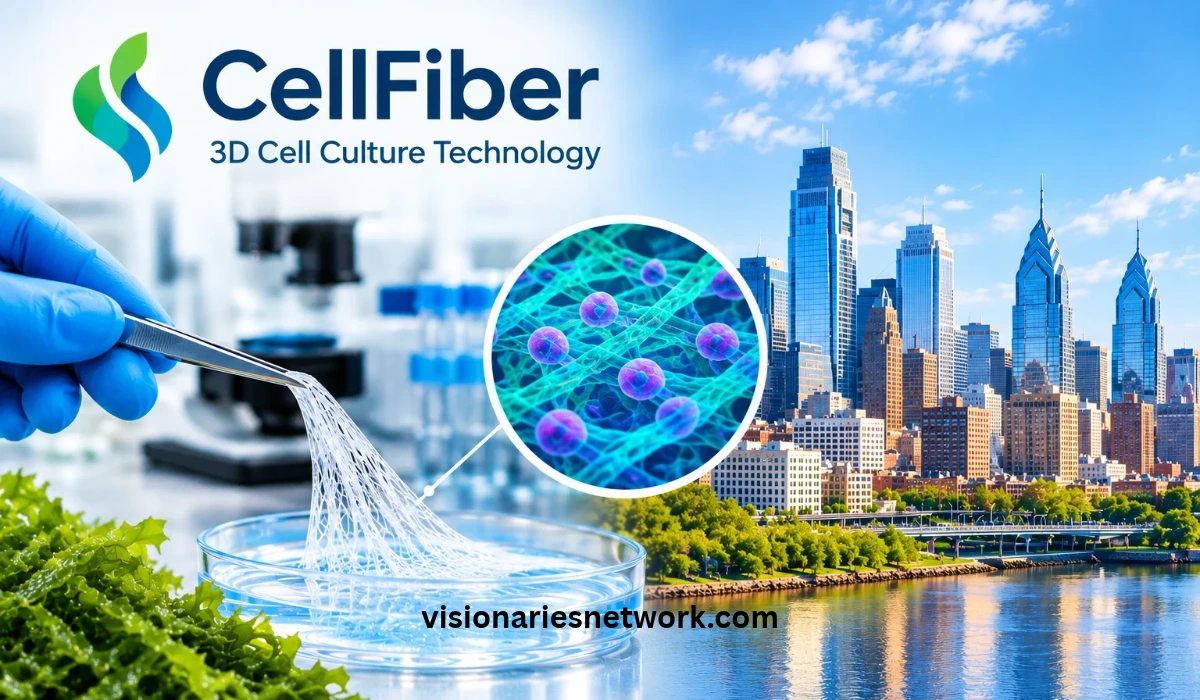
Growing Cells Inside Seaweed-Based Fibers
CellFiber started in 2015, drawing on research from the University of Tokyo’s Institute of Industrial Science. Its technology uses medical-grade alginate, a substance obtained from seaweed, to form thin fibers that hold cells as they grow.
The process allows cells to develop in three dimensions. This approach, known as 3D cell culture, offers an alternative to growing cells on flat surfaces. CellFiber aims to use the method to produce larger quantities of cells for medical applications.
Manufacturing enough cells for treatment remains a difficult part of developing cell-based medicines. Researchers and drug developers need reliable production methods that can deliver sufficient quantities while maintaining cell quality.
CellFiber's technology is intended to address some of these challenges, particularly for treatments that use living cells. More details about its work are available on the company's official website.
Why Philadelphia?
Philadelphia has a long-standing connection to cell and gene therapy research. The University of Pennsylvania played an important role in developing CAR-T cell therapy, which uses modified immune cells to fight certain cancers. The first CAR-T treatment received approval from the US Food and Drug Administration in 2017.
For CellFiber, the city's research community offers opportunities to meet scientists and businesses already working on cell-based treatments.
The company has established its US operation at CIC Philadelphia, which provides workspace for companies in science and technology. Its location in University City places CellFiber within reach of research institutions and other biotechnology businesses.
CEO Kazuchika Furuishi said the Philadelphia office would allow the company to work directly with teams developing cell therapies. He also described the location as a starting point for taking CellFiber's technology into international markets.
Building Relationships with US Companies
CellFiber plans to introduce its technology to American customers and explore research partnerships with universities and other institutions. It also wants to develop relationships with pharmaceutical and biotechnology companies that may benefit from its cell production methods.
These efforts could help the company understand what US developers need from cell production systems and where its approach might fit into existing processes.
The wider market for cell therapy technologies includes tools and methods used to develop, grow and manufacture cells for medical treatment. As more cell-based treatments move through clinical development, manufacturers face pressure to improve production capacity and consistency.
CellFiber has not announced how many people it expects to employ in Philadelphia. The company has also not disclosed the size of the new operation or provided a timeline for further expansion.
What Comes Next for CellFiber?
Opening the Philadelphia subsidiary gives CellFiber a starting point for its US activities, but the company still needs to build its customer base and establish working partnerships. Research collaborations may also help it demonstrate where its technology can be used in cell production.
For now, the focus is on introducing the company's approach to the American biotechnology community. Its progress will depend on the interest it receives from potential partners and how well its technology meets their manufacturing needs.
Frequently Asked Questions
1. What does CellFiber do?
CellFiber develops technology for growing cells inside thin fibers made from medical-grade alginate, a material derived from seaweed.
2. What is 3D cell culture?
3D cell culture allows cells to grow in a three-dimensional environment rather than only across a flat surface. It is used in biological research and the development of cell-based treatments.
3. Why is cell therapy manufacturing challenging?
Producing cells in large quantities while maintaining their quality and consistency can be difficult. Manufacturers must also meet strict requirements for treatments intended for patients.
4. Why did CellFiber choose Philadelphia?
The city has an established biotechnology and cell therapy research community. CellFiber hopes to build relationships with local researchers, pharmaceutical companies and biotechnology businesses.
5. Has CellFiber announced hiring plans?
No hiring figures have been disclosed for its Philadelphia operation. The company has also not shared details about the size of its US workforce.
Browse our most recent publications