Glasses That Take Pictures Are Entering the Workplace
Latest Updates





visionaries Network Team
17 September, 2026
wearable technology
Glasses that take pictures are moving into the workplace as enterprise AR brings hands-free access to information, AI tools, and business applications
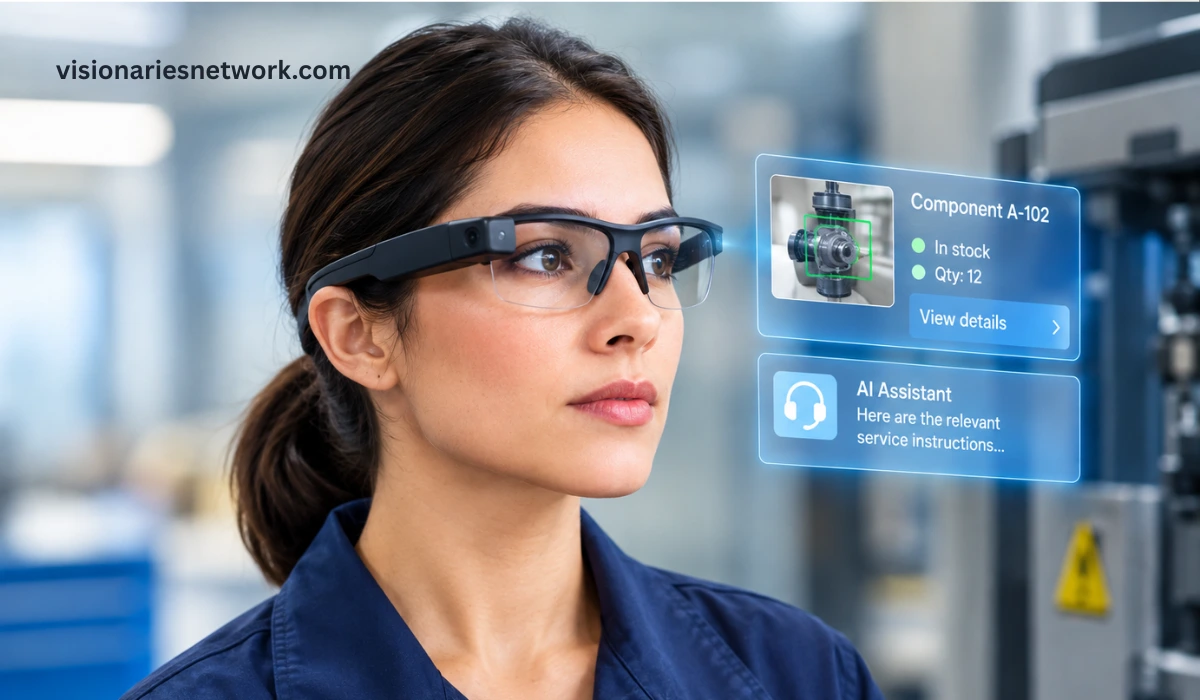
Wearable technology has usually been associated with personal use, from capturing everyday moments to listening to music and receiving notifications. That role is beginning to expand as companies look at ways to bring digital tools into places where workers cannot easily use a phone or computer. Glasses that take pictures are now being developed with displays, voice controls, cameras, and software that can support specific workplace tasks. Snap is among the companies pursuing this direction, with its SPECS augmented reality glasses now being positioned for retail, field service, remote support, and other professional applications, as outlined in Snap's SPECS for Enterprise announcement.
From Camera Glasses to Workplace Computing
The camera itself is not the most significant part of this development. What matters is what happens when the camera is combined with a display and access to business software.
Snap's September 16 announcement provides a clear example. The company said Salesforce is bringing its Agentforce platform to SPECS, allowing employees to identify what they are looking at, create a case, find relevant information, and update workflows without moving back and forth between a separate screen and the task in front of them.
That makes the glasses less like a wearable camera and more like another way of accessing workplace systems. A technician, for instance, could remain focused on equipment while receiving information through the glasses rather than stopping to check a laptop or phone.
Where Enterprise AR Becomes Practical
The idea of enterprise AR becomes easier to understand when it is tied to a specific job. Snap's partnership with AWS provides one example in retail. According to the company's announcement, a store associate could ask Amazon Quick through SPECS where a product is located, check how many units are available, and receive the information directly in the field of view. The employee does not need to leave the sales floor to look up the information on another device.
Field service is another area where the technology has a clear use case. Snap says Tandem by Trifork connects technicians with remote experts and AI agents. An expert can see what the technician sees, help identify components, and add visual annotations to the technician's view. The technician can then follow the guidance while keeping both hands available for the work.
These examples show why enterprise AR is moving beyond demonstrations of digital objects floating in front of a user. The more practical question is whether information can be delivered at the exact point where an employee needs it.
NVIDIA Brings Visual Understanding into the Picture
Another part of Snap's enterprise push involves NVIDIA. The companies are working to bring agents built on NVIDIA's XR AI technology to SPECS, with the aim of helping the glasses understand a worker's surroundings and connect that information with relevant company data.
This matters because workplace tasks often depend on physical context. A worker may need information about a particular component, machine, product, or location rather than a generic answer. If wearable technology can recognize what the employee is looking at and retrieve the appropriate information, the device becomes more useful than a simple camera.
Snap's announcement also includes Hololight, which is developing a spatial workstation for SPECS. The system can stream tools, documents, and 3D models to employees wherever they are working.
Enterprise Smart Glasses Need Business Infrastructure
The move toward enterprise smart glasses is not only about making the hardware more capable. Companies also need to manage the devices once they are deployed across teams.
Snap says it is working with device-management vendors on capabilities such as mobile device management and security controls. That is an important part of enterprise adoption because businesses need ways to control access, secure devices, and manage technology across multiple employees.
The cost of the hardware is another practical consideration. Reuters reported that Snap's SPECS are priced at $2,195, with shipping expected to begin later in 2026 in the United States, United Kingdom, and France. The company also plans a cellular-connected charging case sold separately.
That price places the product firmly in a different category from ordinary consumer eyewear. For businesses, the question will be whether a device at that price can deliver enough value through faster service, easier access to information, remote assistance, or more efficient workflows.
The Workplace Will Test the Technology
There is a noticeable difference between showing what wearable technology can do and proving that employees need it. A worker may appreciate hands-free access to information in one environment while finding glasses unnecessary in another.
Privacy will also remain important. Camera-equipped eyewear used around customers, colleagues, machinery, and company information requires clear rules around recording and data access. Employees need to know when devices are active and how captured information is handled.
Snap's current enterprise push is still an early stage rather than evidence of widespread workplace adoption. The company has announced partnerships and specific use cases, but the wider market will ultimately depend on how organizations deploy the technology and whether workers find it useful in their daily routines.
For glasses that take pictures, this represents a significant change in direction. The camera is becoming one component of a larger system that can display information, connect employees with experts, and interact with business software. With companies such as Salesforce, NVIDIA and AWS now involved in Snap's enterprise strategy, the next phase of wearable computing may be determined less by how well glasses capture a moment and more by how well they help someone complete a job.
FAQs
1. What are glasses that take pictures?
Wearable glasses with built-in cameras that can capture photos or video hands-free.
2. How are these glasses being used at work?
They can give employees hands-free access to information, software, and remote support.
3. What is enterprise AR?
Enterprise AR overlays digital information onto real-world work environments to support specific business tasks.
4. What are enterprise smart glasses?
They are wearable devices that combine cameras, displays, voice controls, connectivity, and business software.
5. Why are businesses exploring smart glasses?
They can help workers access information and assistance without interrupting hands-on tasks.
About the Company
Visionaries Network is a business media and PR platform that showcases leaders, companies, emerging trends, and industry insights while helping brands strengthen their visibility and reach.
Browse our most recent publications