T-Mobile Explores Integrated Sensing and Communication for 6G
Latest Updates




visionaries Network Team
30 October, 2026
telecommunication and electronics
T-Mobile explores integrated sensing and communication for 6G, alongside AI radio access network developments and the future of mobile connectivity
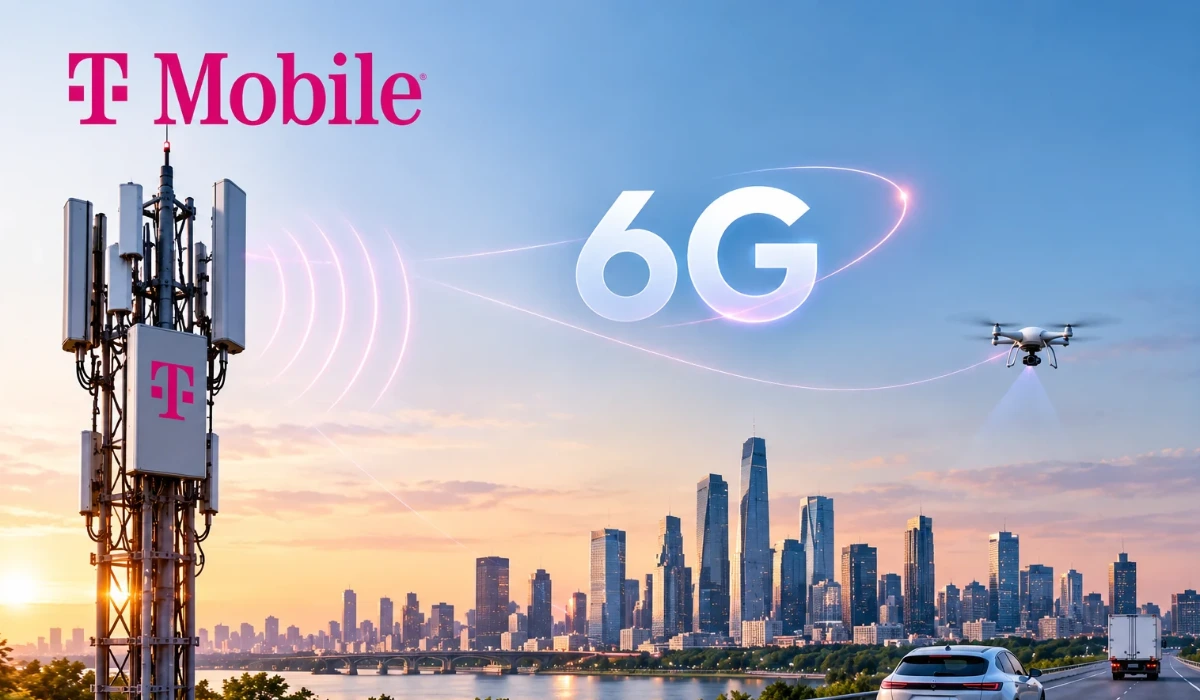
T-Mobile plans to become the first wireless carrier to introduce 6G in the United States, with its technology roadmap pointing towards 2030. The announcement came during its third-quarter 2026 earnings call, where the company discussed how future networks will support artificial intelligence, connected machines and new communication services. A major part of this plan involves integrated sensing and communication, a technology expected to give future mobile networks capabilities beyond transmitting data.
T-Mobile CTO John Saw said 6G would allow base stations and radio equipment to work like radar systems. This could help networks detect and track objects while maintaining their regular communication functions. Such capabilities may support applications involving autonomous vehicles, delivery drones, industrial machines and other connected devices.
6G Could Give Mobile Networks a New Role
Unlike the previous generations of wireless technology, 6G is set to merge communication with environmental sensing. The very radio signals that carry our data could also play a role in pinpointing the location and movement of various objects.
T-Mobile believes these advancements will open up exciting possibilities in fields like remote monitoring, industrial automation, and connected transportation. However, they haven't revealed a specific date for a commercial launch yet. Their hints suggest that we might start seeing 6G networks come to life around 2030.The company has shared more details about its plans in its physical AI network update.
AI-RAN and Physical AI Are Part of the Plan
T-Mobile is also working on an AI radio access network (AI-RAN), which brings artificial intelligence and network computing closer together. The company has partnered with Nokia and NVIDIA to explore how AI workloads and wireless network operations can use shared computing infrastructure.
In October 2026, the partners completed what T-Mobile described as the world's first AI-RAN call on a commercial network. The development is part of its wider effort to prepare its infrastructure for growing AI-related demands.
The company is also working with Amazon Web Services on its Kinetic Edge initiative. The project combines its 5G-Advanced network and distributed edge capabilities with AWS cloud and AI services. The aim is to bring computing resources closer to connected machines, helping them respond to information with less delay.
These developments reflect a wider mobile network evolution, as telecom operators prepare for more devices that generate and exchange information. T-Mobile expects AI wearables, agents, robots and drones to increase demand for network capacity, particularly for uploading data.
T-Mobile Rules Out SpaceX MVNO Partnership
Despite its existing satellite connectivity relationship with SpaceX's Starlink, T-Mobile has ruled out extending the arrangement into a mobile virtual network operator (MVNO) partnership. CEO Srini Gopalan described satellite connectivity as a complementary service rather than a replacement for the company's own network.
T-Mobile also reported service revenue of $19.4 billion in Q3 2026, up 6% year over year. Postpaid service revenue increased 9% to $16.3 billion, while adjusted EBITDA reached $9.6 billion, an 11% rise.
The company's third-quarter financial results show continued growth in its wireless business.
With 6G development still several years away, T-Mobile is focusing on strengthening its existing network while exploring how AI and sensing capabilities could change future wireless services.
Frequently Asked Questions
1. When does T-Mobile expect to launch 6G in the US?
T-Mobile expects 6G networks to begin being built around 2030, although it has not announced a confirmed commercial launch date.
2. What is integrated sensing and communication?
Integrated sensing and communication allows wireless networks to transmit data while using radio signals to detect, locate and track objects in their surroundings.
3. What is an AI radio access network?
An AI radio access network uses artificial intelligence and computing resources to improve wireless network operations and support AI-related applications.
4. Why has T-Mobile ruled out an MVNO deal with SpaceX?
T-Mobile considers satellite connectivity a complementary service and does not see a need to extend its existing relationship with SpaceX into an MVNO arrangement.
5. How could 6G support physical AI devices?
6G could provide faster data exchange, improved sensing capabilities and more responsive connections for physical AI devices such as robots, drones, autonomous vehicles and industrial machines.
Browse our most recent publications