SpaceX Rocket Debris Hits Moon, Creating New Lunar Crater
Latest Updates






visionaries Network Team
05 August, 2026
aviation
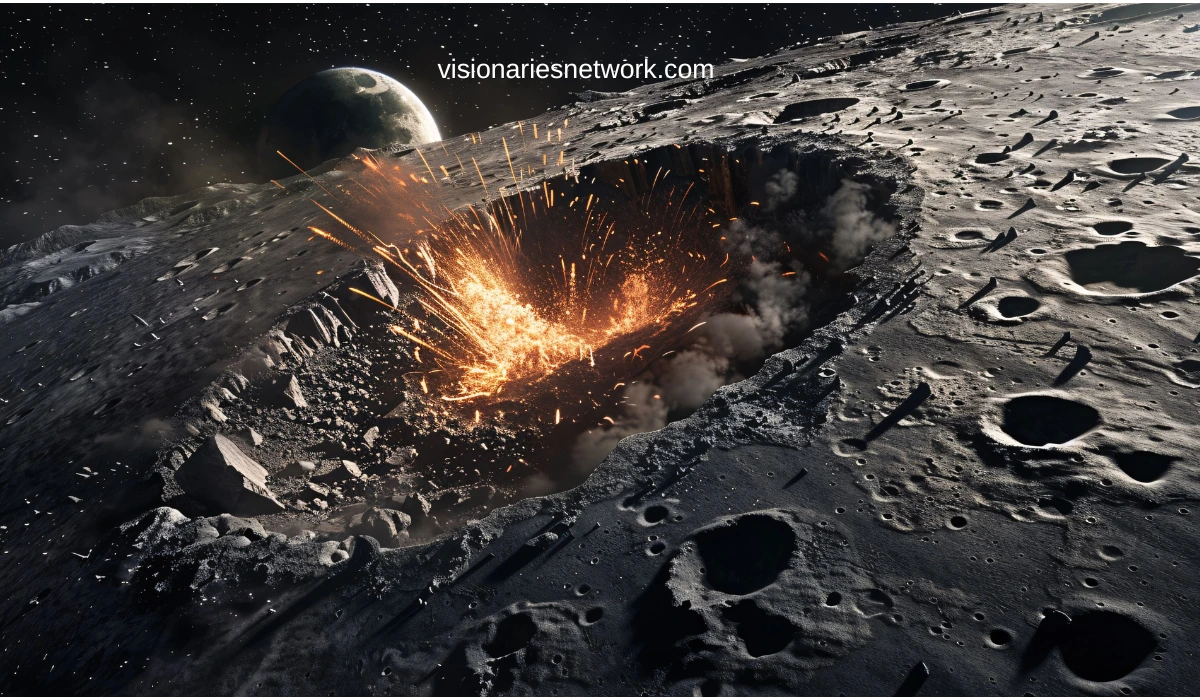
SpaceX rocket debris is believed to have hit the Moon, creating a new lunar crater. Learn how the impact could help NASA study lunar geology and space junk
A SpaceX rocket debris impact on the Moon has drawn attention from astronomers after a four-tonne section of a Falcon 9 rocket is believed to have struck the lunar surface at high speed. The event, while posing no threat to Earth, is expected to provide scientists with valuable data on artificial impacts and lunar geology.
The object was the second stage of a SpaceX Falcon 9 rocket that launched Firefly Aerospace's Blue Ghost lunar lander mission in January 2025. After completing its mission, the rocket stage remained in space and eventually drifted onto a collision course with the Moon due to the combined effects of gravity and solar activity.
NASA to Study the Impact Site
According to NASA, the rocket body was expected to hit the Moon at approximately 5,400 mph (8,690 km/h), creating a crater about 60 feet (18 meters) wide and 12 feet (4 meters) deep. The impact was also expected to eject dust and rocks across the lunar surface, giving researchers an opportunity to study how artificial impacts affect the Moon. NASA said it plans to capture images of the impact site before and after the collision to improve future tracking of space objects. More information is available on NASA's official website: https://www.nasa.gov.
Growing Concern Over Space Junk
Although SpaceX rocket debris impacts on the Moon are rare, the incident has renewed discussions about the disposal of spent rocket stages. Experts noted that deep-space missions often leave upper-stage rocket bodies in solar orbit because they lack sufficient fuel to return safely to Earth.
Astronomer Bill Gray, who tracked the object's trajectory, said the event highlights the importance of improving space debris management, even though it presents no danger to people on Earth. NASA and SpaceX are reportedly discussing ways to reduce similar incidents during future lunar missions.
As space exploration accelerates, managing space junk on the Moon and in deep space is becoming an increasingly important challenge for the global space community.
FAQs
1. What hit the Moon?
A discarded second stage of a SpaceX Falcon 9 rocket is believed to have impacted the lunar surface.
2. Did the impact pose any danger to Earth?
No. NASA confirmed the collision posed no risk to Earth.
3. Why didn't the rocket return to Earth?
The upper stage remained in space after completing a lunar mission because it did not have enough fuel to return.
4. How large is the expected crater?
NASA estimates the crater will be about 60 feet wide and 12 feet deep.
5. Why is this event important?
Scientists can use the impact to study lunar surface changes and improve methods for tracking space debris.
Browse our most recent publications