New Chiral Semiconductor Discovery Unlocks Visible Light Power
Latest Updates






visionaries Network Team
28 April, 2026
semiconductors
University at Buffalo scientists create a new chiral semiconductor that absorbs visible light, opening doors for advanced sensors, optics, and next-gen electronics
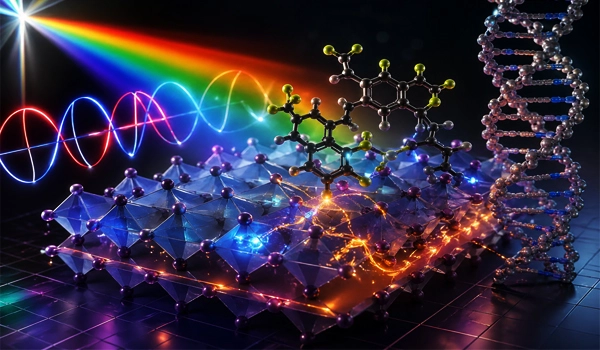
A research team led by the University at Buffalo has developed a new chiral semiconductor system that can absorb visible light while maintaining its unique handedness properties. The breakthrough, published in Nature Communications, could open the door to advanced optoelectronic devices, next-generation sensors, and improved communication technologies.
Chiral materials are structures that exist in left- or right-handed forms, similar to human hands or DNA molecules. These materials are valuable because they can distinguish between left- and right-handed circularly polarized light, making them highly useful in modern electronics.
How Researchers Achieved the Breakthrough
The team solved a long-standing issue with chiral semiconductor materials, which usually struggle to absorb visible light efficiently. Most of these materials only respond to higher-energy ultraviolet light because of their large bandgap.
To overcome this, scientists combined a chiral perovskite semiconductor with a non-chiral organic molecule called F4TCNQ. This molecule is known for accepting electrons easily and helping light energy move through materials.
When exposed to visible light, the new material responded differently to left- and right-handed light waves, while electrons transferred from the chiral host to the dopant molecule. This created a new pathway for visible light absorption.
Why This Matters for Technology
According to lead researcher Wanyi Nie, the new material keeps the chirality of the original semiconductor while gaining the ability to interact with visible light.
This means future chiral semiconductor devices could be used in polarized light sensors, optical communication systems, and photocatalysis technologies. The ability to process different light polarizations could also improve secure data transmission and advanced imaging systems.
What Comes Next
Researchers now plan to study exactly how chirality transfers between the two materials through electron movement. Understanding this process could help scientists design even more efficient electronic materials in the future.
The discovery marks a significant step toward smarter and more responsive light-based technologies.
Browse our most recent publications