What Is a Cryptocurrency Public Ledger and How Does It Work?
Latest Updates





visionaries Network Team
20 October, 2026
Crypto
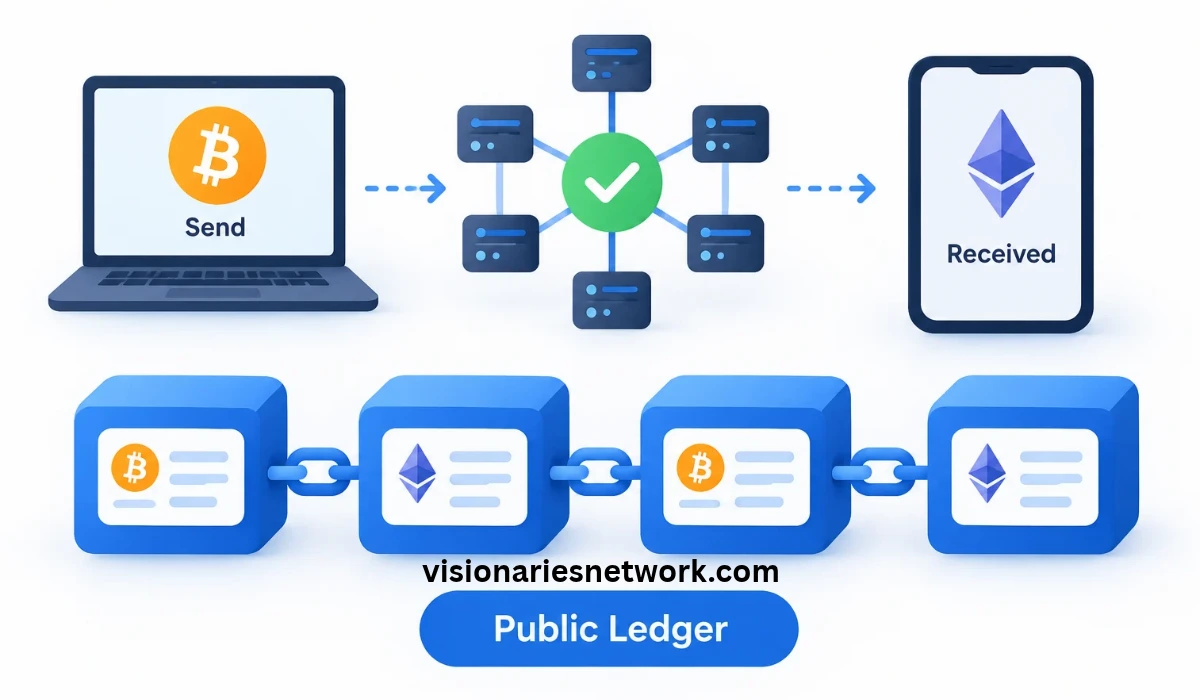
What’s a Cryptocurrency Public Ledger and How Does It Work? When you send Bitcoin or Ethereum, it leaves behind a trail that anyone can look at. There’s no need for a bank statement here. Instead, the transaction gets logged on the blockchain, where users can see details like how much was sent and whether the network has given it the thumbs up. This is a key difference between cryptocurrency transactions and those managed by banks. The collective record of these transactions is known as a cryptocurrency public ledger.
What Does a Public Ledger Record?
A blockchain keeps track of transactions in blocks that are linked together, creating a chronological history. The specifics can vary by network, but typically, it includes wallet addresses, transaction amounts, fees, and confirmation statuses. Take Bitcoin as a clear example. Imagine someone sends BTC to a family member. Instead of just relying on a screenshot from the sender, the recipient can look up the transaction on a Bitcoin explorer. This record will show whether the payment has been added to a block and how many confirmations it has received.
Bitcoin's developer documentation explains how blocks connect and how the network maintains its transaction history.
A Real Example from Ethereum
Ethereum transactions can be examined in the same way. Consider this public transaction record on Etherscan. The page records a transfer of approximately 0.00001875 ETH and displays the transaction status, block information, timestamp and wallet addresses.
This example shows what a public ledger offers in practice. Someone looking at the record can inspect the transaction details without needing access to the sender's wallet. However, the record alone does not explain why the payment was made or establish the real-world identity of the people involved.
Ethereum's transaction guide explains how transactions are submitted and processed on the network.
How Are Transactions Checked?
Before a transaction becomes part of the accepted blockchain record, the network checks whether it follows the relevant rules. This process is called transaction verification.
For example, Bitcoin's rules prevent the same funds from being spent twice in conflicting transactions. A transaction must also carry the required authorisation. If it fails the network's checks, it will not be accepted as a valid payment.
Valid transactions may wait before being included in a block. The time involved depends on network activity and the cryptocurrency being used. Once a transaction is recorded, additional confirmations can provide greater confidence that it is part of the accepted chain.
What Are the Risks?
Public records certainly make tracking payments easier, but they don’t eliminate the risks associated with cryptocurrency. Typically, a wallet address doesn’t reveal a person’s name, but sometimes, transaction patterns and other details can give away the owner’s identity.
Making mistakes can be quite costly too. If someone accidentally sends cryptocurrency to the wrong address, recovering those funds can be nearly impossible. Once a transaction is confirmed, reversing it is usually a tough task, and just because something is on a public record doesn’t mean the recipient is reliable.
Network congestion can also cause delays or drive up fees. Plus, users need to stay vigilant about scams, poor wallet practices, and security issues with cryptocurrency services. While checking the transaction record can help clarify what happened on the blockchain, it won’t prevent every possible loss.
A public ledger is a handy tool because it allows individuals to look into transaction activity themselves. Understanding how to read this record empowers users to verify payments while remaining aware of the inherent risks.
FAQs
1. What exactly is a cryptocurrency public ledger?
It's essentially a communal record of all cryptocurrency transactions that’s kept on a blockchain. Public blockchains let anyone take a peek at the activities that have been recorded.
2. Can anyone take a look at a public ledger?
For the most part, yes! Anyone with access to a compatible blockchain explorer can look up transactions on a public blockchain.
3. How do I find out if a payment has been received?
You can do this by searching for the transaction hash on an explorer that supports the right network. Just check its status and confirmation details.
4. Does a public ledger show someone's identity?
Not really. Typically, wallet addresses are displayed instead of actual names, although there might be other information that could connect an address to a specific person.
5. Can a confirmed cryptocurrency payment be undone?
Most confirmed transactions are pretty much set in stone and can't be easily reversed. If you accidentally send funds to the wrong address, getting them back can be tough or even impossible.
About the Company
Visionaries Network is a business PR and media platform that publishes leadership profiles, company features, industry news, and business insights to help businesses and leaders build visibility and credibility.
Browse our most recent publications