Commercial Energy Management Is Changing How Businesses Use Power
Latest Updates


visionaries Network Team
04 September, 2026
Environment Power and Clean Energy
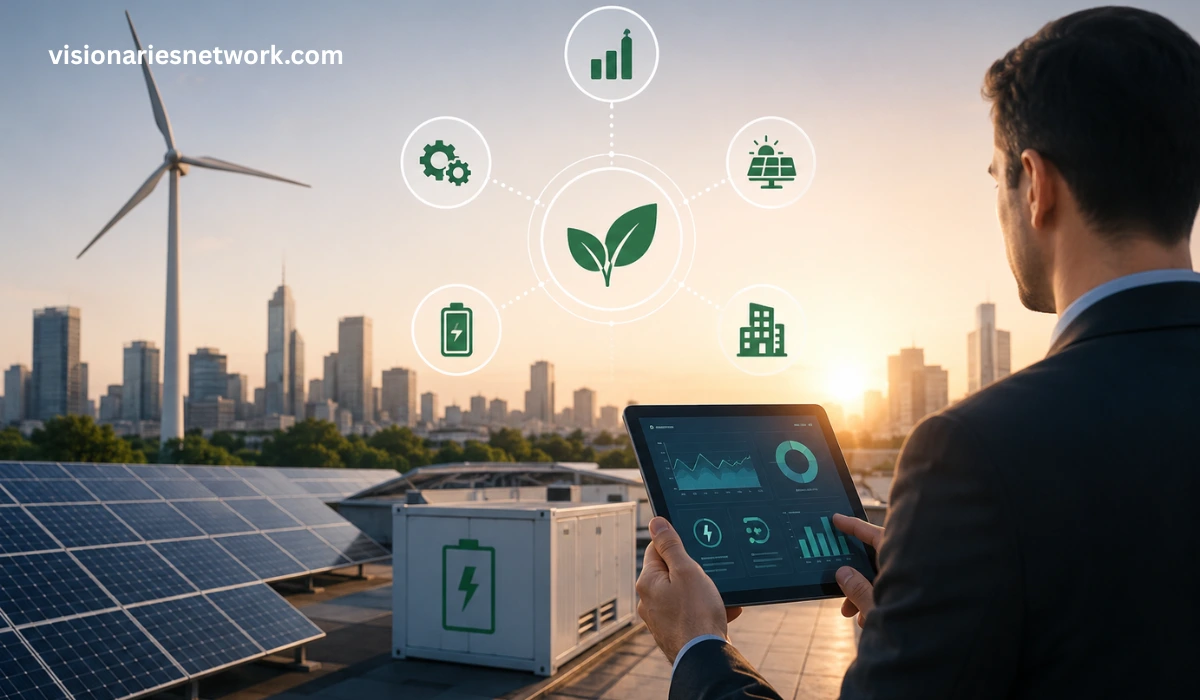
Electricity was once treated as a straightforward business expense. A company used what it needed, received a monthly bill, and looked for ways to reduce the cost if it became too high; that approach is changing. Today, businesses are paying closer attention to when they use electricity, which equipment consumes the most power, and how renewable energy and storage can fit into daily operations. Commercial energy management is becoming part of that shift, helping companies move from simply consuming power to making more informed decisions about it.
The change comes at a time when electricity demand is increasing around the world. The International Energy Agency expects global electricity demand to continue growing through 2030, driven by industrial activity, electrification, cooling, data centers and other areas of the modern economy. (International Energy Agency electricity report)
For businesses, higher demand creates a simple challenge: electricity needs to be available when it is needed, but using more power can also increase operating costs.
Power Use Is Becoming an Operational Decision
In the past, facility managers often had limited visibility into what was happening between one electricity bill and the next. A monthly figure could show that consumption had increased, but it did not necessarily explain why.
Modern energy technology changes that. Smart meters and connected sensors can provide much more detailed information. A business can see when consumption rises, which equipment is responsible, and whether a particular facility is using more electricity than expected.
Consider a large office building, air-conditioning systems may operate at full capacity even when occupancy changes during the day. Lighting may remain on in areas that are barely occupied. Electric vehicle chargers can also create additional demand if several vehicles are charged at the same time.
With better data, these activities can be coordinated. A company might reduce cooling in an empty section of a building, schedule certain equipment for a different time, or stagger vehicle charging. None of these changes necessarily requires a major alteration to the business itself. The difference is that electricity use becomes something the company actively manages.
Rising Demand Is Making the Change More Important
This shift is not happening in isolation; India's electricity market has seen strong growth. The Indian Energy Exchange reported record monthly electricity trading of 13,938 million units in August 2026, representing a 20.2% increase from August 2025. (Financial Express report on India's electricity market)
The United States is experiencing similar pressure from a different set of sources. Texas, for example, is dealing with rapidly increasing electricity requirements connected partly to data-center expansion. A University of Houston analysis reported that U.S. electricity demand could rise significantly by 2030, with data centers contributing substantially to peak demand growth.
This has consequences for businesses planning new facilities or expanding existing ones. A company adding machinery, refrigeration equipment, computing capacity or charging infrastructure cannot simply assume that additional electricity will always be available at the same cost. Power availability and demand are becoming part of operational planning.
The Move Toward Smarter Power Decisions
This is where smart energy management becomes useful. Instead of relying entirely on manual checks, businesses can connect meters, sensors, building systems and energy software. The resulting information can help managers identify patterns and respond to them.
For example, a factory may discover that one production line consumes considerably more electricity than similar equipment elsewhere. That could lead to an investigation into maintenance, equipment settings or operating schedules.
A retailer with hundreds of locations can take a similar approach. Rather than looking at every store individually, its energy team can compare facilities and focus on locations with unusual consumption.
Tata Power has highlighted this approach for industrial facilities, describing smart energy management as a combination of real-time monitoring, automation and analytics aimed at improving energy efficiency and controlling costs. (Tata Power's smart energy management)
The benefit is not necessarily about making every building consume as little electricity as possible, a factory cannot simply shut down its machines to save energy, a hospital cannot compromise essential systems, a hotel still needs to keep guests comfortable; the objective is to make energy use more precise.
Solar and Storage Are Changing the Daily Energy Mix
Renewable energy is adding another layer to the equation. A business with rooftop solar may produce a large amount of electricity during sunny hours, but its highest demand may occur at another time. Battery storage can help bridge that gap by holding electricity for later use.
This means a company can potentially make decisions about when to generate, store, purchase and consume electricity.
The issue is particularly important as renewable energy expands. India has experienced periods when available solar power could not be fully used because of transmission and storage limitations. The Associated Press reported that nearly 11 terawatt-hours of solar generation was curtailed over a 15-month period because of such constraints.
For businesses, the lesson is straightforward, installing renewable generation is only part of the solution. Companies also need to think about when that energy is available and how it fits with their actual demand.
Companies Are Already Making Changes
There are already examples of organizations using technology to change how their facilities operate.
Schneider Electric worked with Massmart, a major South African retail group, on building management and energy efficiency. According to Schneider Electric, the program covered more than 250 stores and generated annualized energy cost savings of R15 million. (Schneider Electric's Massmart case study)
The example is important because retail businesses have complicated energy profiles. Stores have refrigeration, lighting, heating and cooling systems, security equipment and other electrical loads. Customer traffic also changes throughout the day.
Managing that environment requires more than asking employees to switch off unused lights, it requires information about how the building is actually operating.
The same principle can apply to warehouses, manufacturing plants, offices, hotels and healthcare facilities. Different industries have different priorities, but they all benefit from knowing where energy is being used and where adjustments can be made without affecting essential operations.
AI Can Help Find Patterns
Artificial intelligence is also beginning to play a supporting role, energy systems can generate huge amounts of data. An AI-powered system can examine that information, identify unusual patterns and help forecast future demand.
For a company with a single building, this may not always be necessary. For a business operating hundreds of facilities, however, automated analysis can save considerable time.
AI can help identify which buildings deserve attention, whether consumption is behaving differently from normal, or when demand is likely to increase.
This creates an interesting situation for businesses. AI is contributing to higher electricity demand through applications such as data centers, while AI-based tools can also help companies understand and manage their own energy consumption.
The U.S. Department of Energy has identified data centers and AI-related computing as important contributors to expected electricity-demand growth. (U.S. Department of Energy on data-center electricity demand)
Energy Management Is Moving Closer to the Boardroom
The broader rise of business energy management reflects a change in priorities. Energy decisions are increasingly connected to financial planning, facility expansion, sustainability targets and operational reliability.
A manufacturer may want to reduce the energy cost of producing goods. A retailer may want to lower electricity expenses across hundreds of stores. A warehouse may need to coordinate automated equipment and electric vehicles. A data center may be more concerned with securing enough reliable power for future expansion.
Each business will have a different answer. Some may benefit from solar. Others may need better monitoring or automated controls. Some may find battery storage useful, while others may focus first on shifting flexible electricity demand.
The important part is understanding the company's actual energy profile before deciding what technology to purchase.
What Businesses Can Do Now
Companies do not need to transform their entire energy infrastructure at once. They can start by understanding their current consumption.
A useful first assessment can include:
This information can provide a much clearer starting point, it also prevents businesses from investing in technology simply because it has an attractive label. A smart meter, battery or AI platform is useful only when it addresses a real operational need.
The Future of Business Power Use
The biggest change may be the way companies think about electricity itself. Power is no longer just something that arrives through the grid and gets consumed. Businesses can increasingly decide when certain loads operate, when batteries charge, when stored energy is used, and how renewable generation fits into their daily requirements.
That becomes particularly valuable as electricity demand rises and power infrastructure faces greater pressure.
The trend also points toward a more connected approach to energy. Buildings, vehicles, solar panels, batteries, machinery and software can increasingly work together instead of operating as separate systems.
For companies, this can mean better control over costs and fewer surprises. It can also support broader sustainability goals without treating them as completely separate from business performance.
The transition will not look the same for every organization. A small office will have very different requirements from a factory or data center. But the underlying principle is becoming common: businesses need greater visibility and control over how they use electricity.
That is why commercial energy management is becoming an important part of modern business operations. As power demand continues to grow, companies that understand their consumption and make deliberate decisions about when and how they use electricity will be better positioned to manage both costs and future energy needs.
FAQs
1. What is commercial energy management?
Commercial energy management involves monitoring and controlling energy consumption in business facilities to improve efficiency, manage costs and support reliable operations.
2. How does smart energy management help businesses?
It uses tools such as smart meters, sensors, automation and analytics to give businesses a clearer view of their energy consumption and help them make better decisions about when and where electricity is used.
3. Why is business energy management becoming more important?
Growing electricity demand, higher operating costs, renewable energy integration and concerns about grid capacity are encouraging businesses to take a more active approach to energy use.
4. Can businesses combine solar power with energy management?
Yes. Energy management systems can help coordinate solar generation with electricity demand, battery storage and grid power, allowing businesses to make better use of available renewable energy.
5. Does energy management require artificial intelligence?
No. Businesses can benefit from basic monitoring and automation without AI. AI can be added where large amounts of energy data need to be analyzed, forecast or managed automatically.
About the company
Visionaries Network is a business and technology media platform covering emerging trends, innovations, and developments across a wide range of industries. It also highlights visionary leaders, entrepreneurs, and innovators whose ideas and work are shaping the future of their fields.
Browse our most recent publications