AI and VR Transforming Brain Tumour Surgeries in Hyderabad
Latest Updates




visionaries Network Team
18 June, 2026
ai vr and automation
Hyderabad neurosurgeons on World Brain Tumour Day highlight how AI and VR are improving precision, safety, and recovery in brain tumour surgeries
Hyderabad neurosurgeons marked World Brain Tumour Day by emphasizing how modern innovations are reshaping neurological care and surgical precision. Experts noted that AI and VR transforming brain tumour surgeries in Hyderabad is becoming a defining trend in advanced neuro-oncology treatment, offering safer and more accurate surgical outcomes.
AI and VR in Pre-Surgical Planning
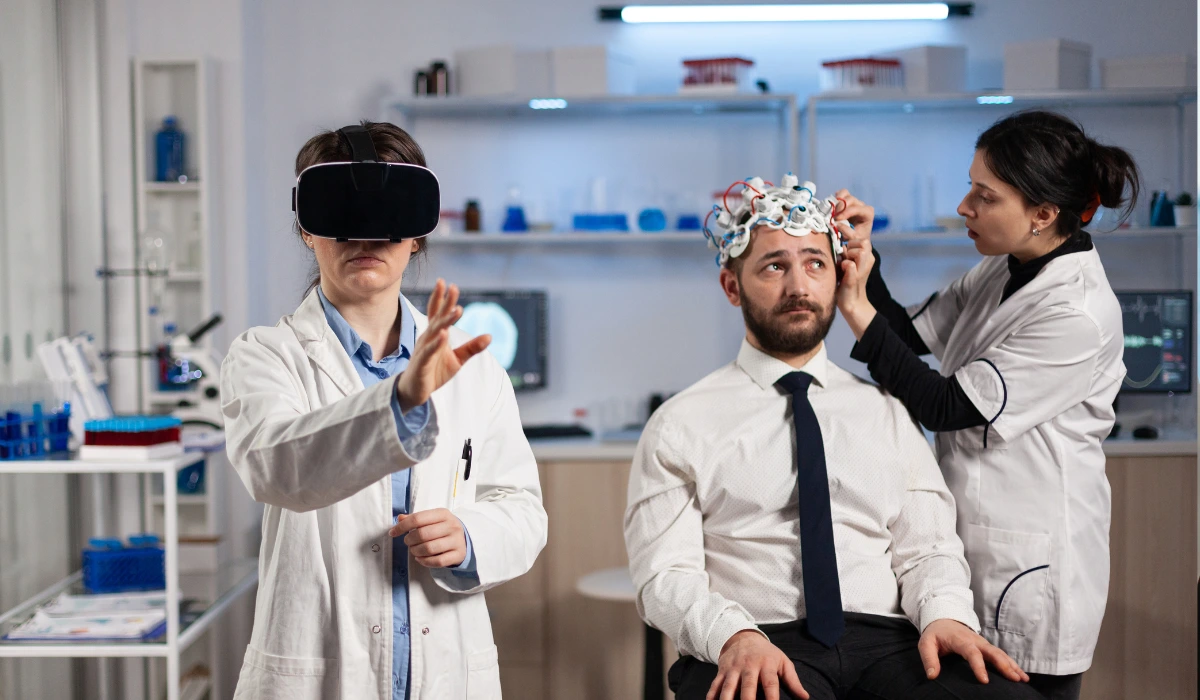
Doctors explained that treatment planning now begins with immersive technologies that allow surgeons to enter high-resolution 3D brain models using virtual reality systems. Artificial intelligence assists in identifying tumour boundaries and mapping critical regions responsible for speech, memory, and motor control.
On World Brain Tumour Day, specialists highlighted that AI and VR transforming brain tumour surgeries in Hyderabad is enabling surgeons to simulate complex procedures before entering the operating theatre, significantly reducing risks and improving surgical confidence.
Precision Surgery and Minimally Invasive Techniques
In the operating room, robotic navigation systems, laser-assisted tools, and connectomics-guided mapping help neurosurgeons remove tumours with high precision while preserving healthy brain tissue. These minimally invasive methods reduce surgical trauma and shorten recovery periods for patients.
Expert Insights on Patient Outcomes
Senior neurosurgeon Dr Abhirama Chandra Gabbita stated that early detection combined with advanced technology is crucial for better neurological outcomes. He added that endoscopic skull base and transorbital approaches allow access to deep-seated tumours through natural pathways, minimizing damage to normal brain structures.
Future of Neurosurgery and Global Context
Experts believe that AI and VR transforming brain tumour surgeries in Hyderabad will continue to expand as hospitals integrate robotics and machine learning into routine care. This shift aligns with global efforts to improve brain tumour awareness and treatment standards. More information on brain tumour awareness and treatment advancements can be found at the World Health Organization resource page: WHO Brain Cancer Overview.
With continued innovation, Hyderabad is emerging as a hub for precision neurosurgery, where technology-driven care is improving survival rates, reducing complications, and enhancing quality of life for patients undergoing complex brain tumour procedures.
FAQs
Q1. What is the significance of World Brain Tumour Day?
World Brain Tumour Day, observed on June 8, aims to raise awareness about brain tumours, promote early diagnosis, and highlight advancements in treatment and patient care.
Q2. How is AI changing brain tumour surgery in Hyderabad?
AI helps neurosurgeons analyse brain scans, map tumour locations, and predict surgical outcomes with higher accuracy, enabling safer and more precise operations.
Q3. What role does virtual reality play in neurosurgery?
Virtual reality allows surgeons to explore 3D reconstructions of the brain before surgery, helping them plan procedures, avoid critical areas, and reduce surgical risks.
Q4. What does “AI and VR transforming brain tumour surgeries in Hyderabad” mean?
It refers to the growing use of artificial intelligence and immersive virtual reality tools in Hyderabad hospitals to improve tumour detection, surgical precision, and patient recovery outcomes.
Q5. Do these technologies improve patient recovery?
Yes. By enabling minimally invasive procedures and better surgical planning, AI and VR reduce complications, shorten hospital stays, and improve long-term neurological outcomes.
Browse our most recent publications