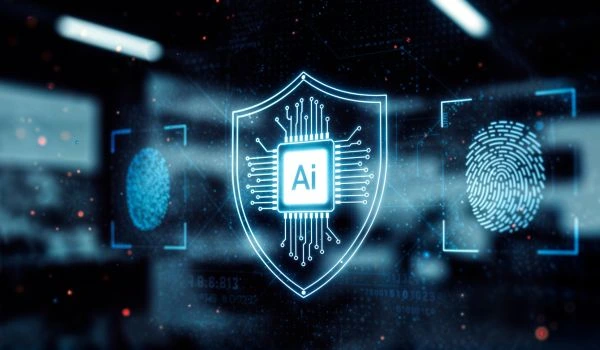
Demystifying Cybersecurity Warns of Rising AI Cybersecurity Risks in the Digital Age
Latest Updates





visionaries Network Team
16 March, 2026
cybersecurity
Cybersecurity expert Durga Prasad Dube’s new book warns that AI cybersecurity risks are rising rapidly as artificial intelligence reshapes global digital security
As artificial intelligence transforms industries worldwide, cybersecurity experts are warning that the same technology powering innovation could also accelerate digital threats. In his new book, Demystifying Cybersecurity: Myths, Mindsets and the Quest for Resilience, cybersecurity specialist Durga Prasad Dube argues that the world is entering a new era of AI cybersecurity risks, where machines can defend systems but also launch attacks at unprecedented speed.
Published by Bloomsbury India, the book explains that cybersecurity has evolved beyond a purely technical challenge. Instead, it has become a strategic priority that will determine how resilient businesses, governments, and societies remain in an increasingly digital world.
AI Is Reshaping the Cybersecurity Battlefield
Drawing on more than four decades of experience in financial regulation, corporate cybersecurity leadership, and academic research, Dube explains that modern cyber threats are advancing faster than many traditional defense systems can adapt.
Artificial intelligence is playing a dual role in this transformation. On one hand, it helps security teams detect threats faster, analyze large datasets, and automate incident responses. On the other hand, attackers are also using AI to develop sophisticated cyber weapons.
According to Dube, these AI cybersecurity risks include automated hacking tools, deepfake-based deception campaigns, intelligent malware, and advanced phishing strategies designed to trick even experienced users.
“Artificial intelligence has fundamentally changed the cybersecurity equation,” Dube writes. “While AI can significantly enhance threat detection and response, it is also being weaponized by attackers.”
Cybersecurity Becoming a Systemic Global Risk
The book highlights how cyber threats are increasingly becoming systemic risks that can impact entire industries and economies. From ransomware attacks on corporations to supply chain breaches affecting multiple organizations, cyber incidents are no longer isolated events.
Large-scale attacks can disrupt financial systems, damage supply chains, and undermine trust in digital platforms. These expanding AI cybersecurity risks are forcing governments and companies to rethink their security strategies.
From Cyber Defense to Cyber Resilience
Rather than relying solely on defensive technology, Dube advocates a broader shift toward cyber resilience. This approach focuses on anticipating attacks, limiting damage, and recovering quickly after breaches occur.
The book also challenges common myths in cybersecurity, such as the belief that technology alone guarantees safety or that compliance with regulations automatically ensures security.
Instead, Dube argues that effective cybersecurity requires strong leadership, better governance, employee awareness, and a culture of shared responsibility across organizations.
As emerging technologies such as cloud computing, nation-state cyber operations, and quantum computing reshape the digital world, the author stresses that understanding AI cybersecurity risks will be essential for building a safer and more resilient digital future.
Browse our most recent publications