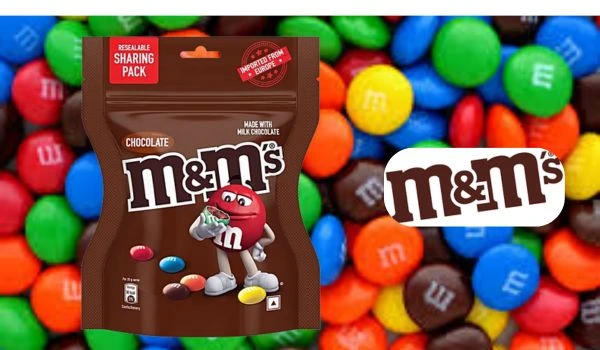
FDA Classifies M&M’s Recall Over Missing Allergen Warnings
Latest Updates






visionaries Network Team
06 Febuary, 2026
retail and ecommerce
FDA issues Class II M&M’s recall after promotional packaging failed to list milk, soy, and peanut allergens, affecting thousands of repackaged candies across 20 states
M&M’s recall news emerged after the US Food & Drug Administration announced that Beacon Promotions Inc. had voluntarily recalled thousands of repackaged M&M’s products due to missing allergen disclosures. The candies may contain milk, soy, and peanuts, but the promotional packaging failed to include the required allergen warnings, posing a potential risk to consumers with food allergies.
Beacon Promotions Inc. issued the recall on January 26, covering more than 6,000 units of repackaged M&M’s candies distributed nationwide. On February 4, the FDA officially classified the action as a Class II recall, indicating that consumption may cause temporary or medically reversible adverse health consequences, particularly for individuals with allergies.
Which M&M’s products are affected?
The M&M’s recall applies specifically to candies that were repackaged for promotional purposes and labeled with various company names rather than standard retail packaging. The affected products include select 1.3-ounce bags of M&M’s Peanut candies and classic M&M’s candies.
Consumers can identify the recalled Peanut M&M’s by “Make Your Mark” promotional labels with the lot code M1823200 and a “best by” date of April 30, 2026. The recalled classic M&M’s appear in numerous promotional packages, including those labeled with corporate and institutional names such as Adobe, Xfinity, Morgan Stanley, Subaru, Best Western, Liberty University Environmental Health & Safety, and many others.
Lot codes and distribution areas
All products involved in the M&M’s recall carry one of the following lot codes: L450ARCLV03 (best by 12/1/2025), L502FLHKP01 (best by 1/1/2026), L523CMHKP01 (best by 6/30/2026), or L537GMHKP01 (best by 9/1/2026).
The recalled candies were distributed across 20 states, including California, Texas, Florida, New York, Pennsylvania, Ohio, Washington, and Wisconsin, among others.
What consumers should do
According to the FDA, the M&M’s recall was issued solely due to improper labeling and not because the candies themselves are contaminated or unsafe. However, individuals with peanut, soy, or milk allergies are strongly advised not to consume the affected products, as doing so could result in a serious or potentially life-threatening allergic reaction. These consumers should discard the candy immediately.
Those without relevant allergies do not need to take action, as the recall is precautionary in nature. Still, the FDA emphasizes the importance of accurate allergen labeling to protect vulnerable consumers, highlighting why the M&M’s recall remains a significant food safety reminder.
Browse our most recent publications