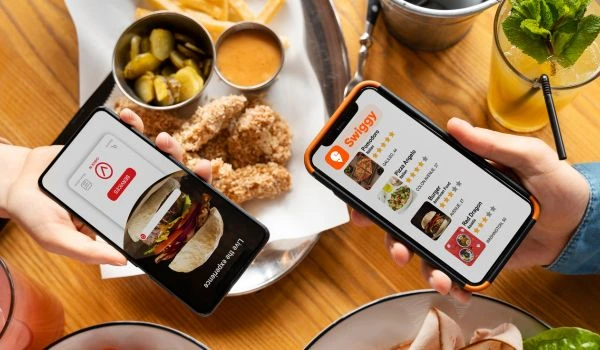
Swiggy Enables Food and Grocery Ordering Through ChatGPT Using Model Context Protocol
Latest Updates




visionaries Network Team
29 January, 2026
retail and ecommerce
Swiggy now allows users to order food, groceries, and book restaurants directly through AI tools like ChatGPT, Claude, and Google Gemini using the Model Context Protocol (MCP), eliminating the need for the Swiggy app.
Food delivery and quick-commerce platform Swiggy has rolled out a new artificial intelligence (AI)-driven ordering capability that allows users to place food, grocery, and dining-out orders directly through AI tools such as ChatGPT, Anthropic’s Claude, and Google Gemini.
The feature eliminates the need for users to open the Swiggy app, marking a significant step toward app-less, conversational commerce. Users can now order from Swiggy Food, Instamart, and Dineout by interacting with AI chatbots using natural language prompts.
The integration is powered by the Model Context Protocol (MCP), an open-source standard that enables AI models to securely connect with external services, including commerce platforms, data sources, and payment workflows.
How the MCP-based integration works
Once users connect their AI assistant to Swiggy via an MCP URL, the AI agent can autonomously complete transactions on their behalf. This includes searching for restaurants or products, comparing options, applying available discounts or coupons, and proceeding to checkout.
For example, prompts such as “order 5 kg atta on Instamart” or “order a highly rated biryani I would love” trigger the AI agent to execute the entire ordering process within the chat interface.
This positions Swiggy among early adopters globally to operationalise MCP at scale in consumer commerce, particularly across quick commerce, food delivery, and dining-out services.
Strategic push toward conversational commerce
Commenting on the launch, Swiggy Chief Technology Officer Madhusudhan Rao said the move is aimed at reducing friction in everyday decision-making.
“By bringing MCP to quick commerce, food delivery, and dining out, we’re removing friction from daily decisions and enabling a level of ease, personalisation, and joy that makes on-demand convenience feel effortless,” Rao said in a statement.
From a strategic standpoint, the initiative reflects Swiggy’s broader push to embed itself into emerging AI ecosystems rather than relying solely on proprietary app engagement. As large language models increasingly act as consumer-facing interfaces, commerce platforms risk being disintermediated unless they integrate directly into these environments.
Implications for the food delivery ecosystem
Swiggy’s move underscores a growing industry shift toward AI-agent-led commerce, where conversational interfaces handle discovery and transactions. For food delivery and quick commerce companies, this could reshape customer acquisition, brand visibility, and user retention strategies.
By making its services accessible through third-party AI platforms, Swiggy is effectively betting that future consumer interactions may originate outside traditional apps—within AI assistants that function as personal shopping agents.
The rollout may also intensify competitive pressure across India’s food delivery and quick commerce sector, as rivals evaluate similar integrations to remain relevant in an AI-first internet landscape.
Browse our most recent publications