Van Allen Probe Re-entry Confirmed as NASA Spacecraft Burns Up Over Pacific
Latest Updates






visionaries Network Team
13 March, 2026
aviation
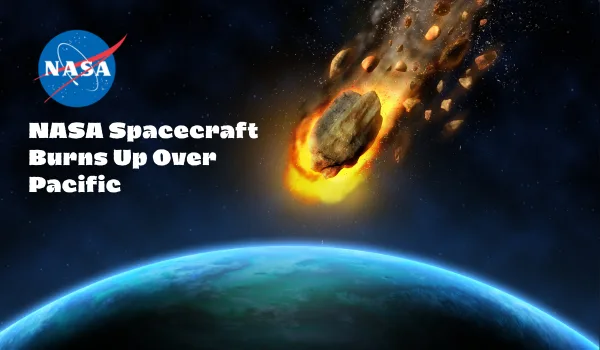
The Van Allen Probe completes its Van Allen Probe re-entry after 14 years in orbit, marking the end of a historic mission studying the Van Allen radiation belts, according to NASA
The long-running mission of the Van Allen Probe has officially reached its final chapter after the spacecraft re-entered Earth’s atmosphere nearly 14 years after its launch. The United States Space Force confirmed the Van Allen Probe re-entry on Wednesday over the Eastern Pacific Ocean at approximately 06:37 EDT (10:37 GMT).
The re-entry occurred roughly 12 hours later than initially predicted, but officials said the delay was well within the normal margin of error for tracking the orbital decay of satellites. The spacecraft weighed more than 1,300 pounds (about 600 kg) and was expected to mostly burn up while passing through Earth’s atmosphere during the Van Allen Probe re-entry.
Minimal Risk from Falling Debris
According to NASA, most of the spacecraft’s structure was likely destroyed by the intense heat generated during atmospheric re-entry. However, small fragments could have survived and reached the ocean surface.
NASA estimated that the risk of debris harming anyone on Earth was extremely low. The agency calculated the probability of a person being injured by falling debris at approximately one in 4,200, which officials described as a minimal and acceptable risk.
Mission Designed to Study Earth’s Radiation Belts
The spacecraft launched in 2012 alongside its twin satellite as part of a mission to study the mysterious Van Allen radiation belts, two massive rings of charged particles trapped by Earth’s magnetic field. These belts play a critical role in protecting the planet from harmful cosmic radiation and solar storms.
Scientists hoped the probes would provide detailed insights into how particles enter and exit these radiation zones and how solar activity influences them.
Mission Far Outlasted Its Original Plan
The mission was initially designed to last two years, but both spacecraft exceeded expectations by continuing to collect data for nearly seven years. The program officially concluded in 2019 after the probes ran out of fuel and could no longer orient themselves toward the Sun to maintain power.
During their operational period, the spacecraft repeatedly traveled through the radiation belts, allowing researchers to observe how energetic particles behave in space.
Breakthrough Discovery: A Third Radiation Belt
One of the mission’s most significant scientific discoveries was the identification of a temporary third radiation belt that forms during periods of intense solar activity. This finding changed scientists’ understanding of Earth’s radiation environment and how dynamic it can be.
While the first satellite’s Van Allen Probe re-entry has now concluded, its twin spacecraft remains in orbit. NASA says the second probe is expected to re-enter Earth’s atmosphere sometime after 2030, bringing the historic mission fully to an end.
Browse our most recent publications