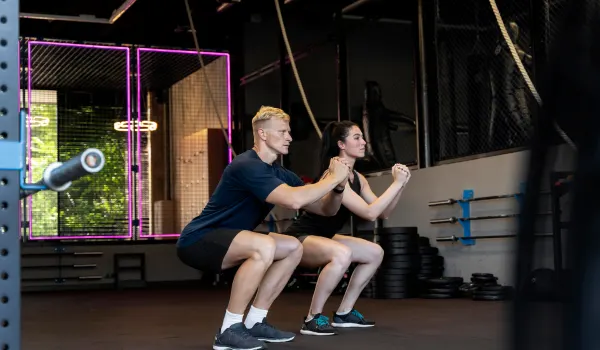
Experts Share Strategies to Improve CrossFit Open Performance
Latest Updates






visionaries Network Team
13 March, 2026
lifestyle and fashion
Sports science reveals pacing, fatigue management, and efficiency strategies that could significantly improve CrossFit Open performance in this year’s competition
The global fitness community is once again focused on the CrossFit Open, the annual online competition that draws hundreds of thousands of athletes from around the world. While the event is widely known for testing strength and endurance, new insights from sports scientists suggest that success may depend more on strategy than raw fitness.
Researchers studying high-intensity functional training say three key factors—pacing, fatigue management, and movement efficiency—can significantly improve CrossFit Open performance. These principles, rooted in decades of exercise physiology research, are increasingly being used by coaches and elite competitors to gain an advantage.
Smarter Pacing Can Prevent Early Burnout
One of the biggest mistakes athletes make during the Open is starting workouts too aggressively. Exercise science research shows that pacing strategy strongly affects CrossFit Open performance, particularly in workouts lasting longer than several minutes.
When athletes begin at maximum intensity, the body rapidly accumulates metabolic byproducts that interfere with muscle contraction. This leads to earlier fatigue and a sharp decline in power output later in the workout.
Sports physiologists explain that the body’s energy systems are limited. While the phosphagen system can deliver explosive power at the start, it quickly gives way to glycolysis, which produces metabolic stress. If athletes push too hard in the opening minute, recovery becomes difficult during later rounds.
Coaches now encourage competitors to begin workouts at roughly 85 to 90 percent effort and gradually increase pace toward the final stages.
Strategic Rest Can Preserve Strength
Another major factor affecting CrossFit Open performance is how athletes manage muscular fatigue. Studies on neuromuscular fatigue show that pushing movements to failure—such as pull-ups or barbell cycling—can dramatically reduce performance in later sets.
Instead of attempting large unbroken sets, many experts recommend planned rest intervals before failure occurs. Short breaks lasting only a few seconds allow partial recovery of muscle oxygenation and grip strength.
According to fitness researchers, athletes who divide repetitions into smaller clusters often maintain better technique and sustain higher overall output compared to those who push until exhaustion.
Efficiency Can Make the Difference
Beyond strength and endurance, movement efficiency plays a crucial role in competition results. Analysts studying elite athletes have found that transitions between exercises often determine leaderboard rankings.
Even a few seconds lost adjusting equipment or walking between stations can accumulate over the course of a workout. Athletes with smoother transitions and controlled breathing patterns conserve energy and maintain rhythm.
Experts say rehearsing transitions and reducing unnecessary muscle tension can significantly improve CrossFit Open performance during high-intensity workouts.
Strategy Becomes the Real Advantage
As participation in the Open continues to grow globally, athletes and coaches are increasingly turning to sports science for guidance. The latest research suggests that intelligent pacing, strategic rest, and efficient movement may be just as important as strength and conditioning.
For competitors hoping to climb the leaderboard this year, mastering these science-based techniques could prove to be the difference between finishing the workout—and dominating it.
Browse our most recent publications