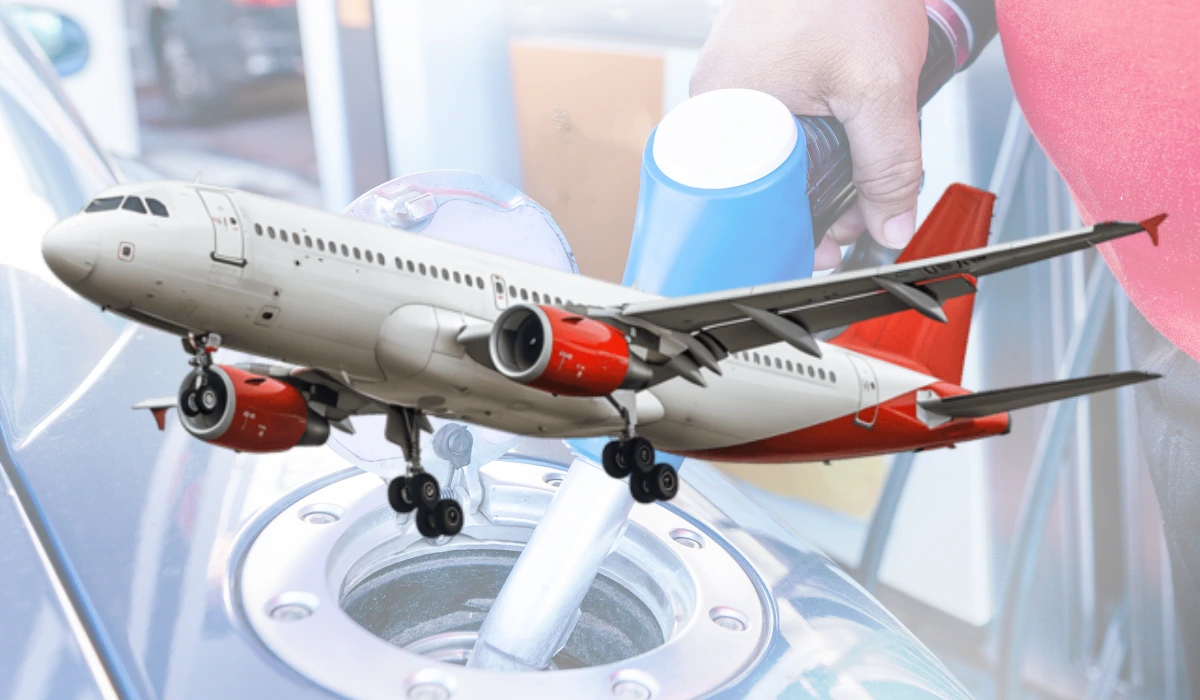
SAF Growth Threatens Net-Zero Goals
Latest Updates






visionaries Network Team
08 June, 2026
aviation
IATA warns SAF will account for just 0.8% of aviation fuel use in 2026, raising concerns about the industry's path to net-zero emissions by 2050
The global aviation sector's efforts to reduce carbon emissions are facing a major challenge as the International Air Transport Association (IATA) forecasts that global production of Sustainable Aviation Fuel will reach only 2.4 million tonnes in 2026.
According to the industry body, this would account for just 0.8% of total aviation fuel consumption, highlighting the significant gap between current production levels and the industry's long-term sustainability targets.
Airlines are expected to spend approximately $4.3 billion on SAF next year, yet supply remains far below the levels needed to support meaningful decarbonization across the sector.
Industry Warns Net-Zero Targets Are Under Pressure
Willie Walsh, IATA's Senior Vice President Sustainability and Chief Economist, expressed concern over the slow pace of progress. He noted that five years after the aviation industry committed to achieving net-zero carbon emissions by 2050, SAF is still projected to make up less than 1% of airline fuel consumption.
Walsh said the industry hopes to eventually meet around 65% of its future fuel requirements through alternative fuels. However, current production trends suggest that achieving this goal will require a significant acceleration in output and investment.
Policy Gaps and Limited Investment Cited as Key Challenges
IATA believes ineffective government policies and a lack of commitment from major energy companies are among the primary reasons for the sluggish growth. Despite recent disruptions in global energy markets, which many expected would stimulate investment in renewable fuels, the incentives needed to build a robust SAF industry have yet to emerge.
The association argues that stronger policy frameworks and investment support are critical for scaling production and creating a commercially viable market for Sustainable Aviation Fuel.
IATA Calls for Global Action
To address the shortfall, IATA is urging governments, fuel producers, and industry stakeholders to work together to expand renewable energy supplies and strengthen production incentives. The organization has also called for open access to fuel infrastructure and improved investment mechanisms to encourage market growth.
In addition, IATA supports the development of a global "book-and-claim" system that would allow airlines and producers to trade SAF credits regardless of location. The association believes these measures are essential to increasing Sustainable Aviation Fuel availability and keeping the aviation industry's climate ambitions on track.
FAQs
1. How much SAF is expected to be produced globally in 2026?
Global production is forecast to reach 2.4 million tonnes.
2. What share of aviation fuel consumption will SAF represent?
SAF is expected to account for only 0.8% of total aviation fuel use in 2026.
3. Why is SAF production growing slowly?
Industry leaders cite weak policy support, insufficient incentives, and limited investment in production capacity.
4. What is IATA's climate goal for the aviation industry?
The industry aims to achieve net-zero carbon emissions by 2050.
5. What solution is IATA proposing to support SAF growth?
IATA is advocating for stronger investment frameworks and a global book-and-claim system to expand market access and production.
Browse our most recent publications