Helion’s Polaris Reactor Reaches 150 Million°C, Advancing Commercial Fusion Ambitions
Latest Updates






visionaries Network Team
14 Febuary, 2026
Environment Power and Clean Energy
Helion Energy’s Polaris prototype reaches 150 million°C using deuterium-tritium fuel, marking a major step toward commercial fusion power and its 2028 Microsoft energy deal.
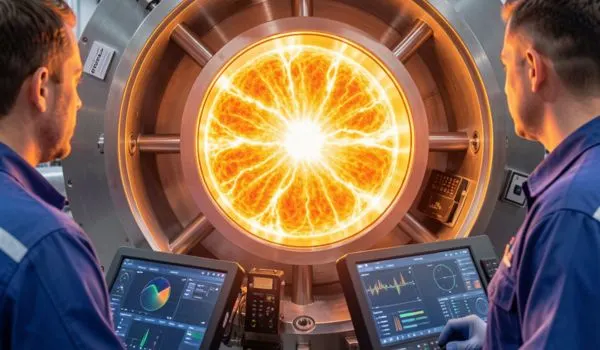
Helion Energy has achieved a major milestone in the race to commercialize fusion power, announcing that plasmas inside its Polaris prototype reactor have reached 150 million degrees Celsius. The temperature marks roughly 75% of what the company believes is required to operate a commercial fusion plant, bringing it closer to its goal of delivering power to Microsoft by 2028.
The Everett, Washington-based startup is leveraging a field-reversed configuration (FRC) reactor design, distinct from traditional tokamak systems. In Polaris, deuterium-tritium fuel is injected into an hourglass-shaped chamber, where magnets accelerate and compress the plasma to extreme temperatures in less than a millisecond. Helion claims to be the first private fusion company operating with deuterium-tritium fuel in this configuration.
Unlike many competitors that extract fusion energy as heat, Helion uses direct electricity recovery—capturing energy from the fusion reaction’s magnetic fields to induce electrical current. This approach could improve overall efficiency and lower operational costs.
While most fusion firms target grid deployment in the early 2030s, Helion has an agreement to supply electricity to Microsoft starting in 2028 through its upcoming 50-megawatt Orion reactor. The company ultimately aims to reach 200 million degrees Celsius, the optimal threshold it believes is necessary for commercial-scale performance.
Backed by major investors including Sam Altman and SoftBank, Helion is also developing a long-term fuel strategy centered on helium-3 production, positioning itself at the forefront of commercial fusion power development timeline 2028, field-reversed configuration fusion reactor technology, and direct electricity recovery from fusion reactions innovations.
Browse our most recent publications