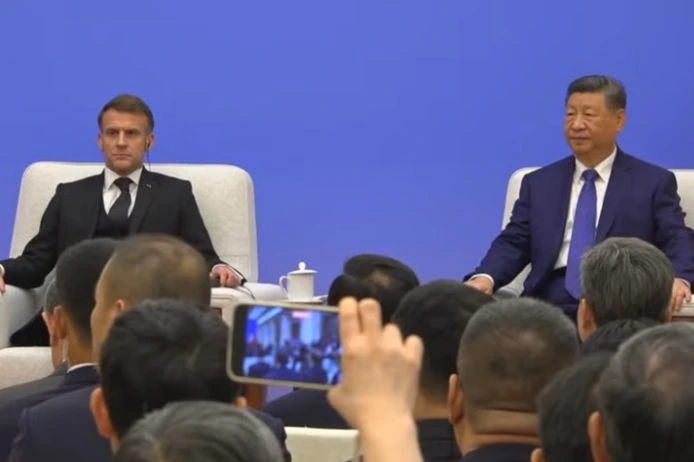
Macron and Xi Hold High-Stakes Talks at France China Summit
Latest Updates





visionaries Network Team
05 December, 2025
brand management digital marketing and business
At the France China summit, Macron and Xi discuss trade, security and climate goals as both nations seek stronger ties amid global tensions and shifting alliances
French President Emmanuel Macron urged Chinese President Xi Jinping to expand cooperation on global security, trade issues and climate commitments during a pivotal meeting in Beijing on Thursday. The high-profile encounter, widely seen as a defining moment for the ongoing France China summit, comes as Europe seeks stronger Chinese engagement on the Ukraine conflict and Beijing navigates mounting U.S. tariff pressures.
Macron arrived with a large delegation of business leaders, aiming to secure new commercial partnerships and strengthen France’s diplomatic reach. With domestic political challenges building ahead of the 2027 presidential election, Macron is using the France China summit to reinforce his international standing and support key French industries.
China’s Broader Strategic Aims
For Beijing, the talks offer a chance to stabilise relations with the European Union as global markets shift under U.S. trade restrictions. China hopes to reduce tensions surrounding its electric vehicle sector, which has drawn scrutiny from European regulators over heavy subsidies. This geopolitical backdrop sets the tone for the France China summit, with both countries seeking economic certainty amid global volatility.
Macron told Xi that cooperation on “geopolitical stability, fairer trade relations and environmental progress” was essential for maintaining global balance. He also renewed calls for Beijing to use its influence to support peace efforts in Ukraine.
Major Trade Hurdles Remain
Despite warm optics—including Xi’s rare decision to accompany Macron to Sichuan province—significant disagreements persist. Analysts say Beijing is unlikely to approve the long-awaited 500-jet Airbus order soon, as China continues to weigh its leverage in negotiations with Washington. Similarly, pricing restrictions affecting France’s cognac exports are expected to remain in place after the EU introduced tariffs on Chinese EVs.
Agricultural trade tensions also continue, with little indication that China will ease duties on EU pork shipments. These persistent friction points underscore the limits of progress at the France China summit, despite both sides expressing optimism publicly.
Modest Agreements Despite Diplomatic Limits
Following their talks, Macron and Xi oversaw the signing of 12 cooperation agreements covering nuclear energy, investment, population ageing, environmental projects and panda conservation—incremental gains reported throughout the France China summit.
France exports about $35 billion worth of goods to China annually and imports roughly $45 billion. As the EU works to reduce dependence on Chinese supply chains, the outcomes of the France China summit will influence Europe’s broader political and economic strategy in the years ahead.
Browse our most recent publications