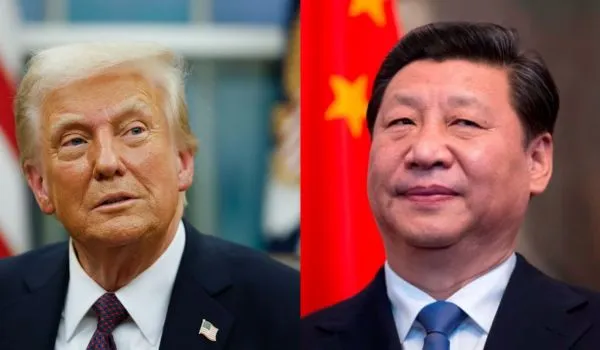
China’s Domestic Economic Strain Looms Over Xi–Trump Talks
Latest Updates






visionaries Network Team
22 December, 2025
Economy
China’s weakening domestic demand is shaping Xi Jinping’s strategy ahead of talks with Donald Trump, as the China domestic economy faces slowing growth and policy strain
As President Xi Jinping prepares for high-stakes meetings with US President Donald Trump next year, China faces a mounting domestic challenge that could weigh heavily on negotiations and shape its broader global strategy. Persistent weakness in the China domestic economy is complicating Beijing’s geopolitical positioning at a moment when trade tensions, technology restrictions and Taiwan are expected to dominate the agenda.
China’s internal economic performance continues to show signs of strain. Slowing industrial output, weak retail sales and subdued investment are undermining efforts to pivot toward consumption-led growth. Economists say policymakers are increasingly forced to balance external diplomacy with the urgent task of stabilising the China domestic economy, a task that has grown more difficult as traditional growth drivers lose momentum.
Export boom masks domestic weakness
On the surface, China’s export engine remains a bright spot. Strong overseas demand has helped keep headline growth close to official targets, with exports surging this year and pushing the trade surplus beyond $1 trillion in 2025, a record that underscores China’s dominance as a global manufacturing hub.
However, beneath the robust trade figures lies a widening disconnect. Domestic consumption has remained fragile, with retail sales rising just 1.3% year-on-year in November, the weakest pace since late 2022. Industrial output has also slowed to its softest expansion in more than a year, highlighting the uneven recovery within the China domestic economy.
Consumer confidence has been hit by a prolonged property downturn, sluggish private investment and fading effects from earlier stimulus measures. Analysts warn that relying on exports to offset domestic weakness is increasingly risky, especially as global trade frictions intensify.
Policy constraints at home
The property sector continues to be a major drag on growth. With household wealth closely tied to real estate, falling home prices have dampened spending and eroded confidence. Fixed-asset investment has also declined sharply, prompting rare public criticism from Xi, who has cautioned against “reckless” spending and emphasised the need for sustainable growth.
Policymakers face limited room for manoeuvre. Aggressive stimulus could raise debt concerns, while deeper structural reforms carry political and economic risks. Without a stronger consumption rebound, the China domestic economy may remain dependent on external demand, complicating Beijing’s long-term rebalancing goals.
Implications for Xi–Trump negotiations
Domestic economic pressures could influence Xi’s approach to talks with Trump. While China retains leverage through its export strength and control over key supply chains such as rare earth minerals, internal vulnerabilities may encourage a more cautious negotiating stance.
Trump has already signalled interest in renewed engagement with Xi, including discussions on tariffs and trade rules. Yet the fragile state of the China domestic economy adds complexity to Sino-US relations, potentially shaping outcomes on trade, technology and geopolitical competition.
As China seeks to revitalise internal demand while projecting strength abroad, Xi faces a delicate balancing act. How he navigates domestic economic strain alongside high-stakes diplomacy may prove decisive for China’s growth path and its global standing in the years ahead.
Browse our most recent publications