
Sound Agriculture: Harnessing Soil Intelligence to Redefine Productivity and Sustainability in Modern Farming
Published: 2026-04-24 | Author: VisionariesNetwork Team
For decades, modern agriculture has relied heavily on synthetic inputs to drive productivity. While fertilizers and chemical treatments have helped increase yields, they have also introduced long-term challenges—soil degradation, rising input costs, and environmental strain. As the industry looks for more sustainable solutions, Sound Agriculture has emerged as a company focused on working with nature rather than against it, tapping into the hidden potential of soil to deliver better outcomes for farmers.
Founded in the United States, Sound Agriculture operates at the intersection of biology, chemistry, and data science. Its mission is straightforward but ambitious: to make agriculture more productive, profitable, and sustainable by activating the natural systems already present in the soil. Instead of replacing traditional inputs entirely, the company aims to enhance efficiency—helping farmers get more out of what they already use while reducing overall dependency.
Activating Nature’s Existing Capabilities
At the heart of Sound Agriculture’s approach is the idea that soil is not just a passive medium, but a dynamic, living system. Within it exists a complex network of microbes and chemical processes capable of unlocking nutrients that plants need to grow. However, these natural systems are often underutilized due to modern farming practices or environmental conditions.
Sound Agriculture’s technology is designed to “activate” these systems. Its products work by stimulating soil microbes and biochemical pathways, enabling crops to access nutrients like nitrogen and phosphorus more efficiently. This reduces the need for additional synthetic fertilizers, which are not only costly but can also contribute to environmental issues such as water pollution and greenhouse gas emissions.
Rather than introducing entirely new substances into the ecosystem, the company’s solutions enhance what is already there. This subtle but powerful shift reflects a broader trend in agriculture—moving from input-heavy models to more regenerative, efficiency-driven approaches.
Practical Solutions for Real-World Farming
One of the reasons Sound Agriculture has gained traction is its focus on practicality. Farmers are often cautious about adopting new technologies, especially when they involve significant changes to established practices. Sound Agriculture addresses this by offering solutions that integrate seamlessly into existing workflows.
Its products are designed to be easy to apply, often fitting within standard planting or fertilization routines. This reduces barriers to adoption and allows farmers to test the technology without taking on excessive risk. The company has also invested heavily in field trials and real-world validation, ensuring that its solutions deliver consistent results across different crops and growing conditions.
The economic case is compelling. By improving nutrient efficiency, farmers can reduce input costs while maintaining—or even improving—yields. In an industry where margins can be tight, this combination of cost savings and performance is a key driver of adoption.
Bridging Sustainability and Profitability
Sustainability in agriculture is often framed as a trade-off, but Sound Agriculture is working to change that narrative. By enabling crops to use nutrients more efficiently, its technology reduces excess fertilizer application, which in turn lowers the risk of runoff into waterways and decreases environmental impact.
This approach aligns with increasing regulatory pressure and consumer demand for more sustainable farming practices. However, what makes it particularly effective is that it does not rely solely on external incentives or compliance. Instead, it offers direct financial benefits to farmers, making sustainability a byproduct of better business decisions rather than an added burden.
The company’s work also contributes to broader climate goals. Fertilizer production and use are significant sources of greenhouse gas emissions. By reducing dependency on these inputs, Sound Agriculture’s solutions can play a role in lowering agriculture’s overall carbon footprint.
Building the Future of Regenerative Agriculture
Beyond its current product offerings, Sound Agriculture is investing in research and development to further expand its capabilities. The company continues to explore new ways to harness soil biology and chemistry, with the goal of creating a more resilient and adaptive agricultural system.
This forward-looking approach positions Sound Agriculture within the growing movement toward regenerative agriculture—a model that emphasizes soil health, biodiversity, and long-term sustainability. While the concept has gained attention in recent years, scaling it in a way that is both practical and profitable remains a challenge. Sound Agriculture’s focus on efficiency and integration offers a pathway to make regenerative practices more accessible to a wider range of farmers.
As global agriculture faces mounting pressure to evolve, companies that can bridge the gap between innovation and real-world application will be critical. Sound Agriculture’s strategy of enhancing natural processes rather than replacing them provides a compelling example of how this can be achieved.
Its work reflects a broader shift in how the industry thinks about productivity—not just as a function of inputs, but as a result of smarter, more efficient systems. By unlocking the potential already present in the soil, Sound Agriculture is helping to redefine what sustainable farming can look like in practice.
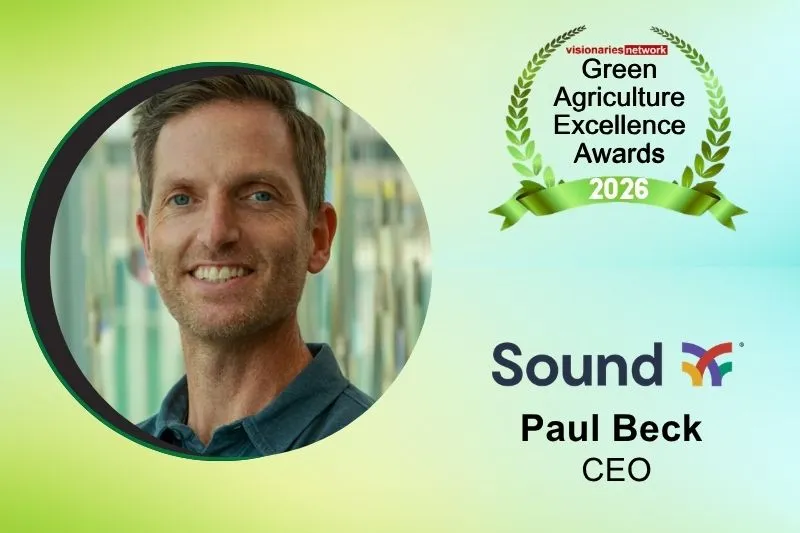
Paul Beck, CEO
“The future of farming isn’t about adding more—it’s about unlocking what’s already there, and using nature’s own systems to grow smarter, stronger, and more sustainably.”
Browse our most recent publications