From Complexity to Clarity: Prodigy Benefit Management's Bold Reinvention of Employee Healthcare
Published: 2026 | Author: VisionariesNetwork Team
In the complex world of healthcare benefits, many organizations struggle to balance rising costs, administrative complexity, and the need to provide meaningful, accessible support to employees. Traditional benefit models often leave employers absorbing unsustainable expenses while employees remain unsure where to go, what care costs, or how to act on emerging health risks.
Prodigy Benefit Management has emerged as a pioneer by changing how employees enter, navigate, and engage with healthcare. Prodigy is not health insurance, and it does not replace an employer's major medical plan. It requires that a major medical plan be offered by the employer, then integrates with that plan as the participant's front door to healthcare - combining transparency, personalized support, predictive analytics, and proactive care navigation.
From Small Business Struggles to Healthcare Innovation: David's Founding Vision
David Middlemiss's professional journey is rooted in a deep understanding of small and family-owned businesses. His early experiences in industries such as equipment manufacturing, rural telecommunications, and cable television exposed him to companies navigating consolidation, market disruption, and long-term succession challenges. Those experiences shaped his commitment to helping closely held businesses remain stable, competitive, and resilient.
David's financial career began in 2000, when he focused on supporting small companies and families. In that work, he saw how opaque healthcare costs and confusing benefit structures created frustration for both employers and employees. Many workers did not understand what they were paying for, how their insurance dollars were being used, or where to turn before a health concern became expensive and disruptive.
The concepts that eventually became Prodigy Benefit Management developed in response to the market disruption following the Patient Protection and Affordable Care Act (PPACA), also known as the Affordable Care Act (ACA). Working with Dominic Mondi and Peter Karl, CPA, JD, David researched and wrote the "20 Questions" article that appeared in The CPA Journal. That work, together with David's experience with employer groups facing ACA-era premium increases and community-rating constraints, helped lay the foundation for Prodigy's transparent, consumer-driven, and preventive model.
A Consumer-First Philosophy
Prodigy is built around a simple belief: healthcare should be understandable, accessible, and centered on the individual. Instead of asking participants to figure out a complex system on their own, Prodigy gives them a guided entry point for understanding risk, accessing support, and making more informed healthcare decisions.
That philosophy is grounded in transparency, personalization, innovation, and compliance. Prodigy helps demystify healthcare by giving participants clearer information about risks, resources, care options, and available pathways. The objective is not to replace insurance, but to improve how participants use the healthcare system connected to their employer's major medical plan.
Paradigm Pathways: A Front-Door Model for Employee-Centric Healthcare
A key Prodigy innovation is the Paradigm Pathways Integrated Healthcare Plan. It was inspired by the aftermath of PPACA, which created added complexity in the employee benefits landscape and contributed to significant premium pressure for many small and mid-sized companies. David observed employer groups he worked with facing premium increases of 18 to 22 percent, while brokers often pointed to community rating as the only available explanation or solution.
Paradigm Pathways was developed to give employees practical support at the personal level while working alongside the employer's major medical insurance plan. The program provides a front-door experience through resources such as no-cost telemedicine access, health coaching, personalized risk assessments, and care navigation. Participants gain a clearer place to start, rather than waiting until they are already inside the medical system and unsure how to proceed.
The model is designed to shift healthcare consumption from reactive treatment toward earlier awareness, prevention, and better management. Employees can review their health risks, connect with coaching, and develop realistic care regimens to help prevent disease onset or better manage existing conditions. Employers, meanwhile, gain a structured way to support workforce health without presenting Prodigy as a substitute for major medical coverage.
Predictive Analytics Meets Personalized Care
A cornerstone of Prodigy's approach is predictive analytics developed over 35 years by its population health data partner, USHC. The analytics focus on 13 diseases that the U.S. Department of Health and Human Services has determined are predictable and preventable. USHC's model draws on its analytics platform and published research from organizations such as Kaiser Permanente, Stanford, and the University of Wisconsin.
The analytics compare individual health information against large data sets to identify a participant's risk of developing symptomatic disease within a three- to five-year period. The model's stated accuracy range of 86 to 93 percent has been verified by The Validation Institute. This allows Prodigy to move from generic wellness messaging to earlier, more targeted intervention.
Participants access a secure, HIPAA-compliant dashboard where they can review risk profiles, educational content, and recommended next steps. They can also connect with health professionals, including registered nurses, dietitians, care coordinators, and other support resources. The goal is to help each person understand what the data means, ask better questions, and take action before a preventable condition becomes more serious.
For example, a participant identified as having elevated blood pressure risk can receive coaching, connect with a provider, and track progress over time. The same principle applies across the 13 predictable and preventable disease categories: identify risk earlier, guide the participant to the right resources, and reduce the likelihood that avoidable conditions become high-cost claims.
Lower Costs for Employers, Greater Control for Employees
Prodigy's impact extends beyond individual health. For employers, the program is structured through a Section 125 cafeteria-plan framework that works alongside the employer's major medical offering. Depending on workforce size, participation, compensation, and plan design, this structure can generate payroll tax savings - typically around $700 to $900 per employee annually - that can be reinvested into operations, additional benefits, or workforce support.
Employees benefit from a clearer point of access, reduced financial stress, and a stronger sense of control over their health. Rather than feeling overwhelmed by opaque insurance plans, participants can use Prodigy first for guidance, education, coaching, and care navigation. They may also earn rewards for engaging with the platform, such as completing health assessments, participating in coaching, or staying proactive with recommended actions.
Employer groups using this model have been able to redirect savings toward operational priorities while supporting earlier health-risk identification, timely intervention, and more stable long-term benefit planning.
Driving Engagement Through Personalization
Traditional wellness programs often rely on broad activities such as weight-loss challenges, fitness classes, or health fairs. These efforts may attract already healthy employees but frequently fail to reach the people with the most meaningful health risks. Over time, one-size-fits-all programs often lose relevance and participation.
Prodigy's platform is more personal and participatory. Participants receive individualized risk information, tailored educational content, and access to coaching that reflects their own priorities. Someone may choose to focus on smoking cessation, weight management, blood sugar control, stress, or another risk factor depending on what is most relevant and achievable.
Participation rates with Prodigy's program often reach as high as 80 percent, compared with typical wellness programs that may see 30 to 40 percent engagement. Higher engagement creates better conversations with healthcare providers, stronger self-management, and a greater likelihood that participants will act on risks before they become more costly.
The model also recognizes that health behaviors are interconnected. A participant who smokes may also be managing anxiety, weight, or blood pressure. Rather than forcing a single narrow objective, Prodigy allows individuals to prioritize practical next steps and build momentum through manageable wins.
A Disciplined Approach to Innovation
One of Prodigy's strengths is its disciplined approach to compliance and technology. The company works with ERISA counsel and compliance advisors who monitor legislative changes and help ensure that program design remains aligned with evolving laws and regulations. That vigilance is critical in an industry where legal, tax, benefits, and healthcare rules can shift quickly.
Prodigy is also selective about technology adoption. Although artificial intelligence and other emerging tools are entering healthcare rapidly, not every application is clinically useful or validated. Prodigy's leadership emphasizes evidence-based solutions that have a clear purpose: improving participant understanding, supporting earlier intervention, and producing meaningful outcomes.
This discipline helps keep the platform focused on practical value rather than marketing buzzwords. The standard is whether a tool helps participants and employers make better healthcare decisions, not whether it sounds innovative.
Tackling Rising Costs and Industry Complexity
Healthcare costs in the United States continue to rise, and employers need more than another layer of complexity. Prodigy's model addresses that challenge by making healthcare easier to enter, easier to understand, and easier to act on before avoidable risks become expensive claims.
The company's approach combines education, early intervention, predictive analytics, and individualized support. By positioning Prodigy as the front door to healthcare - not as insurance itself - the program helps participants use existing major medical coverage more effectively while giving employers a more proactive way to manage long-term cost drivers.
Many employees view health insurance as confusing, expensive, and difficult to trust. Prodigy's mission is to change that experience by giving participants a clearer first step, a more informed path forward, and support that is personalized to their health risks and choices.
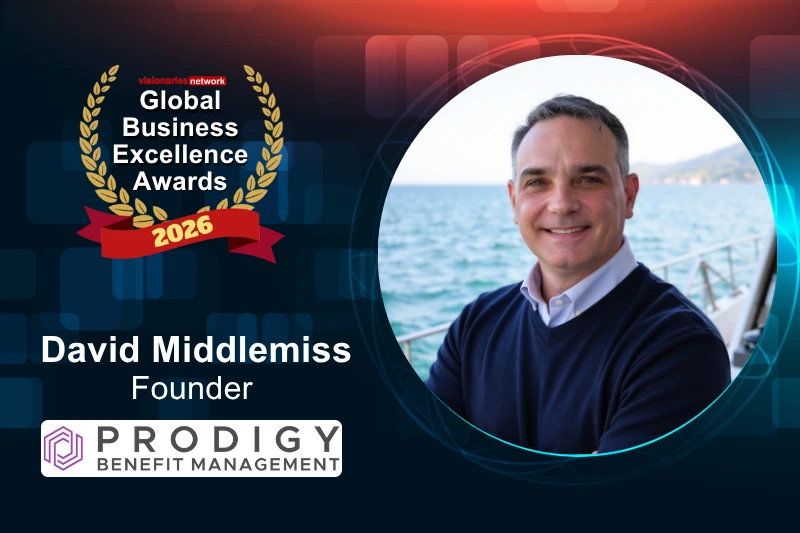
David Middlemiss, Founder
"Healthcare should not be complex or reactive. It should be transparent, personalized, and proactive. By combining predictive insights with individualized support, Prodigy gives participants a better front door to healthcare while helping employers reduce costs and improve long-term outcomes."
FAQs about Prodigy Benefit Management
1. What makes Prodigy Benefit Management's approach different from traditional employer-sponsored healthcare plans?
Prodigy is not health insurance and does not replace major medical coverage. It requires the employer to offer a major medical plan, then integrates with that plan as a proactive front door to healthcare focused on transparency, early risk identification, personalized support, and care navigation.
2. How does the Paradigm Pathways Integrated Healthcare Plan support employees day to day?
It gives participants a clearer first point of access through no-cost telemedicine, health coaching, personalized risk assessments, and care navigation, while working alongside the employer's major medical plan.
3. What role does predictive analytics play in Prodigy's platform?
USHC's analytics help identify participant risk across 13 HHS-determined predictable and preventable diseases, supporting earlier intervention within a three- to five-year risk window.
4. How does Prodigy improve healthcare transparency for employees?
Prodigy gives participants a secure dashboard, risk information, educational resources, and care pathways so they can better understand what to do before, during, and alongside use of the employer's major medical plan.
5. What financial advantages do employers gain by adopting Prodigy's model?
Employers may realize payroll tax savings of approximately $700 to $900 per employee annually, while also supporting earlier intervention, stronger engagement, and better long-term healthcare cost management.
6. Why do participation rates in Prodigy's program exceed those of traditional wellness programs?
The program is individualized, flexible, and tied to each participant's own risk profile, which can drive engagement rates as high as 80 percent.
7. How does Prodigy ensure regulatory compliance and responsible use of technology?
Prodigy works with ERISA counsel and compliance advisors and emphasizes clinically relevant, validated tools that support meaningful participant and employer outcomes.
Browse our most recent publications