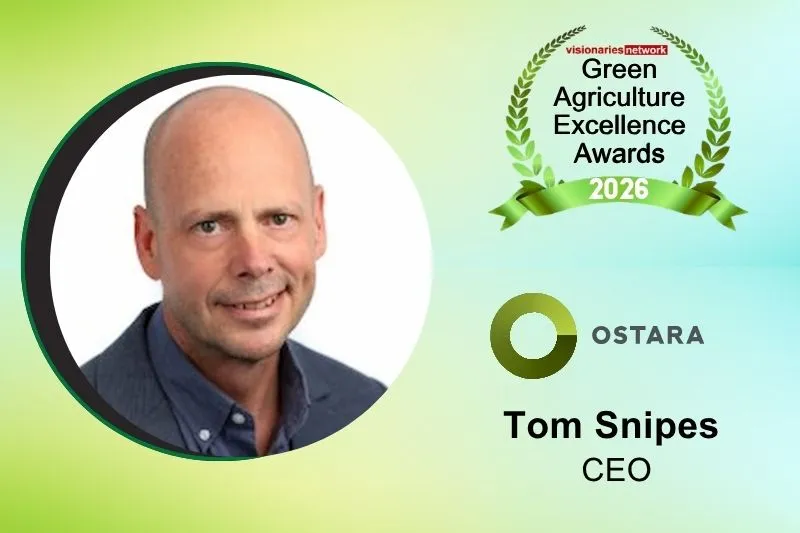
Ostara: Closing the Phosphorus Loop by Transforming Wastewater into Sustainable Fertilizers and Reshaping the Future of Clean Water and Circular Agriculture
Published: 2026-04-24 | Author: VisionariesNetwork Team
In the global conversation around sustainable agriculture and water management, phosphorus rarely takes center stage—yet it should. This essential nutrient underpins modern food production, but its lifecycle has long been inefficient and environmentally damaging. Excess phosphorus from wastewater can pollute rivers and lakes, while the supply of mined phosphate is finite and geopolitically concentrated. Bridging this gap between waste and resource is where Ostara has carved out a distinctive and increasingly important role.
Founded in Canada, Ostara has built its mission around recovering nutrients from wastewater and transforming them into high-value, environmentally responsible fertilizers. Rather than treating phosphorus as a pollutant to be removed and discarded, the company sees it as a resource to be captured, refined, and returned to the agricultural cycle. This circular approach addresses two major challenges at once: improving water quality and supporting more sustainable farming.
Recovering Value from Wastewater
At the heart of Ostara’s innovation is its proprietary nutrient recovery technology, which extracts phosphorus and nitrogen from municipal and industrial wastewater streams. Traditionally, wastewater treatment plants focus on removing these nutrients to prevent environmental contamination. However, this process often leads to operational challenges, including the buildup of mineral deposits that can damage infrastructure and increase maintenance costs.
Ostara’s solution transforms this problem into an opportunity. Through a controlled crystallization process, the company recovers nutrients in the form of a clean, solid material that can be repurposed as fertilizer. This not only reduces the burden on treatment facilities but also creates a new revenue stream from what was previously considered waste.
The result is a more efficient and sustainable system—one that aligns environmental protection with economic benefit. By capturing nutrients before they enter natural water bodies, Ostara helps prevent harmful algal blooms and protects aquatic ecosystems, addressing a growing global concern linked to nutrient pollution.
Creating High-Performance, Sustainable Fertilizers
The recovered nutrients are processed into Ostara’s line of specialty fertilizers, designed to deliver consistent performance while minimizing environmental impact. Unlike conventional fertilizers, which can release nutrients rapidly and lead to runoff, Ostara’s products are engineered for controlled release. This ensures that plants receive nutrients over time, improving uptake efficiency and reducing losses.
For farmers and landscapers, this translates into more predictable results and lower risk of overapplication. The precision of these fertilizers supports healthier plant growth while aligning with best practices for environmental stewardship. In regions where regulations around nutrient management are tightening, such solutions are becoming increasingly valuable.
Importantly, Ostara’s fertilizers are not positioned as a compromise between performance and sustainability. They are designed to meet the practical needs of users while contributing to a more responsible nutrient cycle. This dual focus is key to their adoption across both agricultural and urban applications.
Advancing the Circular Economy in Agriculture
Ostara’s work sits squarely within the broader movement toward a circular economy—an approach that emphasizes resource efficiency, waste reduction, and system-level thinking. By recovering phosphorus from wastewater and returning it to the soil, the company closes a critical loop in the nutrient cycle.
This model has far-reaching implications. Phosphate rock, the primary source of phosphorus for fertilizers, is a non-renewable resource with uneven global distribution. As demand continues to grow, concerns about supply security and price volatility are becoming more pronounced. Ostara’s technology offers a complementary pathway, reducing reliance on mined inputs while creating a more resilient supply chain.
At the same time, the company’s solutions support municipalities in meeting stricter environmental standards. Wastewater treatment plants are under increasing pressure to reduce nutrient discharge, and Ostara provides a way to achieve this without simply shifting the burden elsewhere. Instead, it turns compliance into an opportunity for innovation and value creation.
Scaling Impact Across Water and Agriculture Systems
While the concept of nutrient recovery is not entirely new, Ostara has been instrumental in bringing it to commercial scale. The company partners with municipalities and industrial operators to deploy its systems within existing infrastructure, making it easier to integrate without large-scale disruption.
Its technology has been implemented in multiple regions, demonstrating that circular nutrient management can work in diverse contexts. As awareness grows around the importance of sustainable water and nutrient systems, the potential for expansion remains significant.
Looking ahead, Ostara’s model reflects a broader shift in how industries think about waste. Rather than viewing it as an endpoint, there is increasing recognition that waste streams can serve as valuable inputs for other processes. In agriculture and water management, this shift is particularly powerful, as it connects two critical systems that have traditionally operated in isolation.
Ostara’s approach shows that innovation does not always require entirely new resources—it can also come from reimagining how existing ones are used. By aligning environmental responsibility with economic practicality, the company is helping to build a more sustainable and resilient foundation for both food production and water stewardship.
“The future of sustainability lies in closing the loop—transforming waste into resources and ensuring that what we take from the earth can be used again, responsibly and efficiently.”
Browse our most recent publications