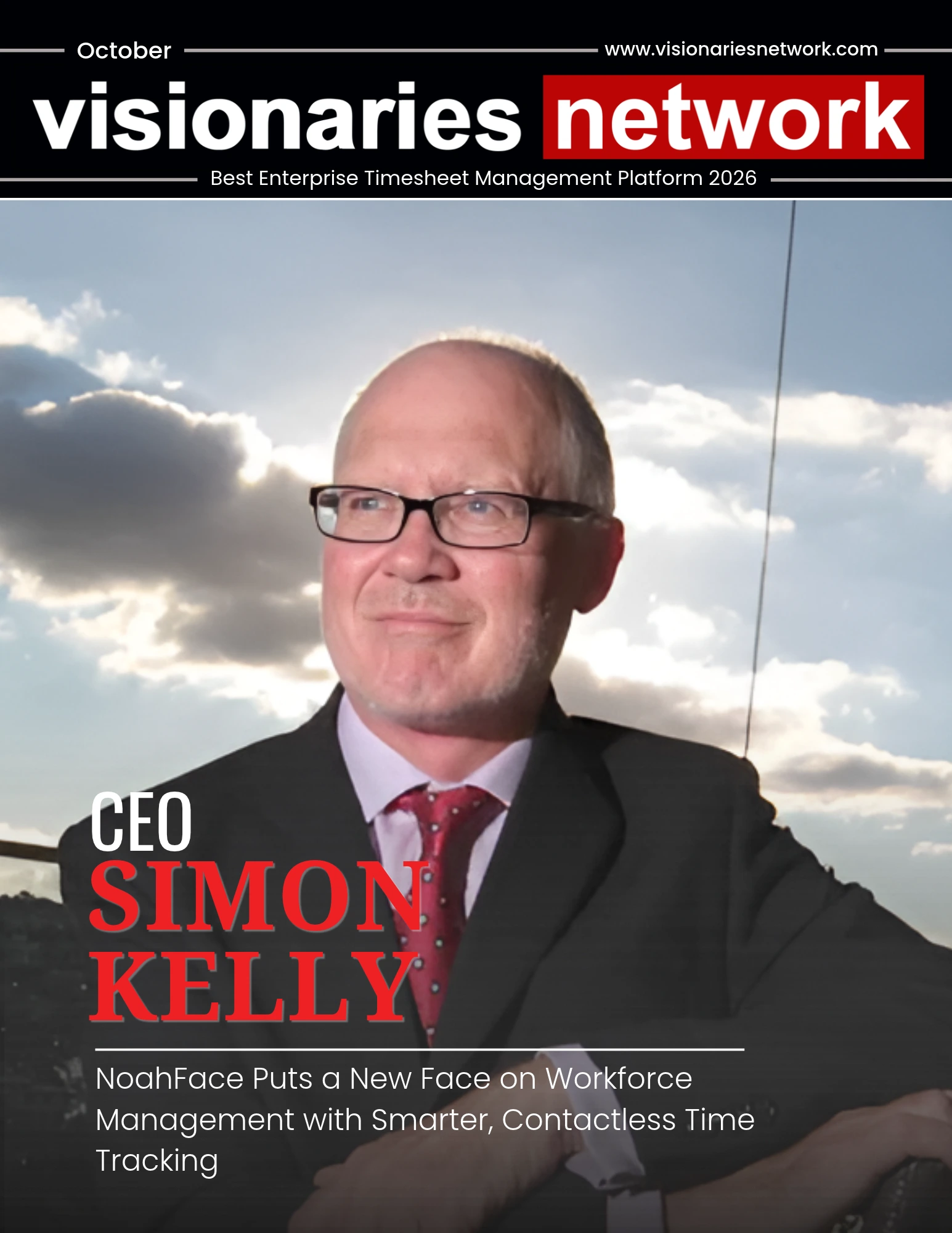
NoahFace Puts a New Face on Workforce Management with Smarter, Contactless Time Tracking

Published: 2026-10-12 | Author: VisionariesNetwork Team
Managing employee attendance across multiple locations, shifts, and work environments can be a complex task for businesses. Traditional time clocks, manual timesheets, and outdated attendance systems often create administrative burdens, leaving organizations with gaps in workforce visibility and timekeeping accuracy. As businesses seek more efficient ways to manage their employees, biometric technology is creating new possibilities for simplifying attendance and strengthening workforce operations.
NoahFace addresses this need through facial recognition technology designed to make employee time and attendance recording more convenient and reliable. By using face-based identification to record attendance, the platform offers an alternative to conventional clock-in methods while supporting organizations in modernizing their workforce management processes.
Its approach reflects a broader shift toward digital workplace tools that reduce repetitive administrative tasks, improve the employee experience, and help businesses maintain more consistent attendance records.
Making Employee Attendance More Efficient
Accurate attendance information is essential for organizations that depend on shift schedules, hourly employees, and reliable workforce records. When attendance is recorded manually or through disconnected systems, businesses may encounter errors, delayed reporting, and unnecessary administrative work.
NoahFace uses facial recognition to simplify the process of identifying employees and recording their attendance. Instead of requiring workers to rely on traditional punch cards or remember multiple identification steps, facial recognition provides a digital method of confirming identity at the point of clock-in or clock-out.
This approach can be particularly useful in workplaces where numerous employees begin and finish shifts within short periods. Streamlining attendance recording can help reduce queues, support more consistent timekeeping practices, and give managers a clearer view of workforce activity.
For organizations operating across multiple sites, standardized digital attendance processes can also make it easier to maintain consistent procedures. The practical value lies not simply in replacing an older time clock, but in creating a more structured way to collect and manage attendance information.
Bringing Contactless Identification Into the Workplace
The adoption of contactless technology has changed how organizations think about everyday workplace interactions. Businesses increasingly look for systems that combine convenience with reliable identification, particularly in environments where employees regularly share equipment or access common facilities.
Facial recognition offers one way to address these requirements. NoahFace's technology enables employees to record attendance through face-based identification, reducing the need for physical contact with shared clocking devices.
However, effective implementation involves more than introducing new hardware or software. Organizations must consider employee communication, appropriate data handling, privacy requirements, and the needs of workers across different roles and locations. A successful attendance system should be practical to use while remaining aligned with the organization's policies and applicable regulations.
For employers, this makes transparency and responsible implementation important parts of the technology adoption process. Employees should understand how identification works, what information is collected, and how their data is managed.
When these considerations are addressed alongside usability, contactless attendance technology can become a useful component of a broader digital workplace strategy.
Connecting Timekeeping With Workforce Operations
Attendance data has value beyond recording when employees arrive and leave. For businesses managing complex schedules, reliable time records can support payroll preparation, attendance reporting, and workforce planning when connected to appropriate systems and processes.
NoahFace's role in digital time and attendance management reflects the importance of capturing workforce information in a consistent format. Accurate records can help organizations review attendance patterns, identify discrepancies, and reduce the effort required to reconcile employee working hours.
For managers, access to dependable attendance information can improve day-to-day oversight. For human resources and payroll teams, digital records can provide a more organized starting point for administrative processes. Where attendance information is integrated with wider workforce management software, it may also contribute to more connected operational workflows.
The effectiveness of these benefits depends on the organization's implementation, system configuration, and integration requirements. Nevertheless, improving the quality and accessibility of attendance records can help businesses reduce avoidable manual work and establish clearer workforce processes.
Balancing Innovation With Trust and Responsible Data Use
Biometric technology introduces important considerations that organizations must address alongside its operational benefits. Facial recognition involves sensitive personal information, making privacy, security, transparency, and appropriate data governance essential to responsible deployment.
Businesses considering such systems need to understand how biometric information is captured, stored, protected, and processed. They should also evaluate applicable privacy laws, employee consent or other lawful grounds for processing, retention policies, and available alternatives where required.
For technology providers, building confidence involves helping customers understand both the capabilities and the responsibilities associated with biometric identification. Clear policies and appropriate safeguards are important to ensuring that innovation supports employees rather than creating uncertainty about how their information is used.
This balance is particularly significant as organizations modernize their workplaces. Technology adoption is most sustainable when practical improvements are accompanied by responsible implementation and clear communication.
NoahFace represents an approach to workforce attendance that combines facial recognition with digital timekeeping. As organizations continue to evaluate new methods of managing attendance, the broader opportunity lies in making everyday workforce processes more efficient while maintaining the trust of the people who use them.
“The future of workforce management lies in making everyday processes more efficient while balancing technological innovation with employee trust.”
FAQs about NoahFace
1. What is NoahFace?
NoahFace provides facial recognition technology for employee identification and digital time and attendance management.
2. How does facial recognition help with attendance tracking?
It allows employees to verify their identity through facial recognition when recording attendance, reducing reliance on traditional clocking methods.
3. Which organizations can benefit from digital attendance systems?
Organizations with shift-based teams, hourly employees, or multiple workplace locations may benefit from more structured digital attendance processes.
4. How can digital timekeeping support payroll administration?
Consistent attendance records can help payroll teams review recorded working hours and identify discrepancies before processing payroll.
5. What should businesses consider before adopting facial recognition?
Businesses should assess privacy obligations, biometric data security, employee transparency, system integration, and applicable legal requirements.
Browse our most recent publications