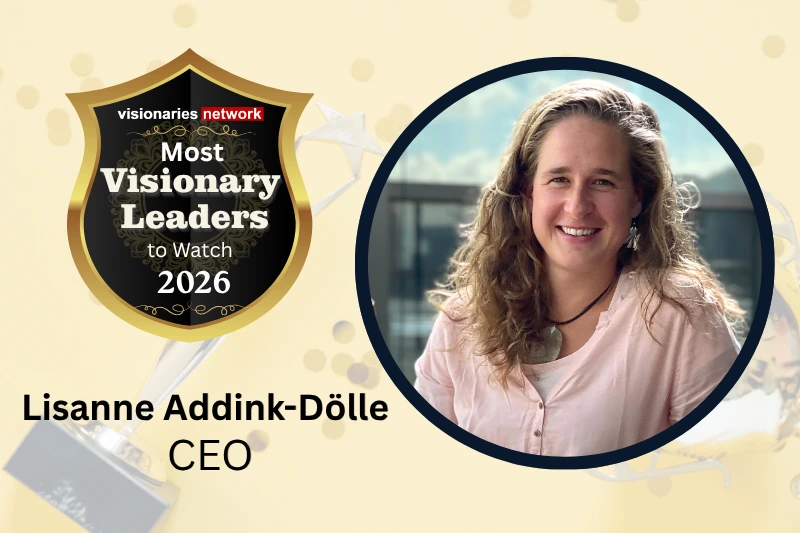
Lisanne Addink-Dölle, CEO of Coffee Based, Turns Coffee Waste into Valuable Materials
Published: 2026 | Author: VisionariesNetwork Team
Waste often retains value long after its original purpose has ended. Coffee grounds, in particular, are usually thrown away after brewing, even though they can still serve as a resource for making new products.
As CEO of Coffee Based, Lisanne Addink-Dölle works to give this overlooked material a second life. Her work brings together sustainable design, material innovation, and practical manufacturing, showing how discarded resources can be transformed into useful products for everyday life.
An Entrepreneurial Approach to Circular Design
Addink-Dölle's entrepreneurial journey is rooted in finding new applications for materials that businesses would otherwise discard. Before developing Coffee Based, she founded VerdraaidGoed, a company that helps organisations transform residual materials into new products. The business analyses waste streams, develops product concepts, and manages their realisation, working with creative designers and people who face barriers to entering the labour market.
VerdraaidGoed has developed several initiatives that demonstrate this approach. Its Foodiebag and NS-Upcycle collection, made from discarded yellow railway timetable boards from the Dutch railway company NS, show how materials from everyday operations can be repurposed. Through Beat the Bag, the company also transforms used flags, banners, and promotional materials into bags, extending their useful lives beyond their original purpose.
This experience with material reuse provides important context for Addink-Dölle's work at Coffee Based. Both businesses start by examining materials that are commonly treated as waste and exploring how they can be put to productive use. However, Coffee Based focuses specifically on coffee grounds and coffee silverskin, the thin layer separated from coffee beans during roasting.
Her approach reflects a practical view of sustainability. Developing a new product requires more than an appealing concept. Materials must be suitable for the intended application, manufacturing processes must work reliably, and the resulting products must offer genuine value to customers. By connecting design with production, Addink-Dölle aims to make circularity part of ordinary business activity.
Coffee Based Gives Coffee Waste a Second Life
Coffee Based was established around a straightforward idea: spent coffee grounds should not automatically be considered worthless. Large quantities are generated every day by homes, cafés, restaurants, and workplaces. Instead of allowing this material to go unused, the company develops materials that can be processed into products for different settings.
Its portfolio includes coffee cups, notebooks, plant pots, and interior products. Coffee-based panels also create opportunities for applications such as furniture and workplace interiors. These products demonstrate how a familiar waste stream can become an ingredient in manufactured goods, giving the material another purpose after brewing or roasting.
The company's work goes beyond developing products from recovered materials. Through its Coffee Recycle Service, Coffee Based collects used coffee grounds from participating workplaces and works with partners to process them for reuse. This approach gives businesses a practical way to take part in a circular system rather than treating coffee waste as something that must simply be removed.
The company also considers alternative uses for collected material that cannot be processed into its products. According to its description of its impact, the remaining grounds can be used to generate renewable energy through anaerobic digestion. This helps extend the potential value of the collection process beyond the products themselves.
Bringing Sustainability into Everyday Business
For Addink-Dölle, one of the important opportunities in circular entrepreneurship is making sustainable choices visible and practical. Coffee-based products can become part of office environments, corporate gifts, or customer experiences. They give organisations a tangible way to communicate their interest in resource reuse while incorporating recovered materials into products people can use.
Turning coffee waste into commercially useful materials also encourages businesses to reconsider how they manage resources. Rather than viewing waste as the final stage of a product's life, organisations can explore whether it can serve as the starting point for something new. Making that transition work requires collaboration among material developers, manufacturers, collection partners, and customers.
Coffee Based brings these elements together through its focus on material development and product applications. Its work demonstrates that circularity can extend beyond recycling and include the design of new materials and the creation of products with a clear purpose.
Addink-Dölle's experience with VerdraaidGoed and Coffee Based reflects a consistent entrepreneurial principle: materials that have lost their original function may still hold considerable value. By finding new uses for coffee grounds and other discarded resources, she is helping businesses explore more responsible ways to design, manufacture, and use products. Her work at Coffee Based shows how an overlooked by-product can become a starting point for practical innovation and a more circular approach to production.
1. Who is Lisanne Addink-Dölle?
Lisanne Addink-Dölle is the CEO of Coffee Based, a company that transforms coffee waste into useful products. She also founded VerdraaidGoed, which develops products from residual materials.
2. What does Coffee Based do?
Coffee Based turns used coffee grounds and coffee silverskin into products such as cups, notebooks, plant pots, panels and interior products.
3. When was Coffee Based founded?
Coffee Based was established in 2017, building on earlier circular-design work by its founders.
4. How does the Coffee Recycle Service work?
The service collects used coffee grounds from participating workplaces and sends them for processing and reuse. Some of the recovered material is returned to participating businesses as products made from coffee grounds.
“Waste is not the end of a material’s journey; it can be the beginning of something valuable.”
Browse our most recent publications