Greater Heights Learning Academy: Creating Inclusive Pathways for Neurodiverse Students to Learn, Grow, and Belong
Published: 2026-11-13 | Author: VisionariesNetwork Team
For some students, the hardest part of school is not the lesson on the board; it is everything happening around it. A crowded classroom, a sudden change in routine, sensory overload, social pressure, or the constant expectation to keep up can turn an ordinary school day into an exhausting experience.
Greater Heights Learning Academy (GHLA) was created with these realities in mind. Formerly known as the Mediated Learning Academy, the specialized K–12 school was founded by Kathleen Jeffrey and Ingrid Jeffrey to create an educational environment that recognizes and responds to the different ways neurodiverse students learn and experience the world.
At GHLA, education and therapy come together within the same environment. Teachers, Educational Assistants, therapists, counsellors, families, and students work collaboratively to create the conditions each learner needs to participate and progress. Small class sizes, individualized education plans, mediated learning, and practical support are central to this approach.
Rather than expecting every student to adapt to a single way of learning, GHLA begins with the individual. By understanding each learner’s strengths, needs, interests, and challenges, the school can identify the right strategies, tools, and support to help them engage with learning, develop confidence, and move forward on their own path.
Where Emotional Safety Creates the Confidence to Learn and Belong
Emotional safety is a major part of life at GHLA. For a student who finds unexpected changes or busy environments difficult, knowing what is coming next can make a significant difference.
Every classroom uses clear visual schedules that show students what their day will involve. Staff also give advance notice before changes such as drills, guest speakers, or other interruptions to the usual routine.
When students become overwhelmed, quiet and sensory reset spaces are available. Staff are trained to recognize early signs of escalation and respond before a situation becomes more difficult. Instead of simply treating dysregulation as bad behavior, they look at what may have triggered it and work with the student on other ways to respond. Trauma-informed practices, calm communication, open body language, and de-escalation strategies form part of this approach.
GHLA also works to keep academic performance separate from a student's sense of self-worth. Students are given room to make mistakes, ask questions, and try again. Teachers look at effort, creativity, individual strategies, and progress rather than focusing only on a final grade.
Counsellors and therapists help students name emotions, understand the physical signs of stress, and develop practical coping skills. When problems arise between students, restorative conversations can help them communicate in a lower-pressure setting.
This sense of safety is closely connected to learning. When students are less focused on simply getting through the school day, they have more opportunity to take part in it.
An Individualized Education Plan That Grows with Every Child
At GHLA, an IEP is a working plan that changes as a student grows. The team identifies learning barriers and may provide assistive technology, extended timelines, distraction-free spaces, or other accommodations. Academic, social, and emotional goals are tracked through progress data and adjusted when needed.
Teachers, Educational Assistants, therapists, and parents work together to keep these goals connected. Older students can work toward the BC Dogwood Diploma or School Completion Evergreen Certificate, while modified senior programs may include independent living and life skills.
GHLA also has Occupational Therapists, Speech-Language Pathologists, Physiotherapists, Counsellors, and Music Therapists on site. Their involvement allows therapy to become part of the school day. Support can range from specialized writing tools and sensory regulation to communication and social skills activities. Regular communication among the team also helps connect therapeutic needs with classroom strategies and IEP goals.
Where Small Classrooms, In-House Therapy, Mediated Learning, and Creative Experiences Open More Ways to Learn
Class size matters at GHLA. Smaller groups and low student-to-educator ratios allow teachers to respond quickly when students need help, explain concepts differently, and give learners more confidence to ask questions and try challenging tasks.
Mediated learning, hands-on activities, play, collaboration, coding, digital learning, applied skills, music, and art give students different ways to engage. The school also uses students' interests as starting points for deeper learning.
Art and music provide additional ways to communicate and develop skills. Painting, crafts, clay, keyboards, and percussion can support expression and coordination, while music therapy uses rhythm and vocal exercises to support areas such as speech, memory, and auditory processing. Group music, drum circles, murals, talent shows, artwork displays, and the winter concert also encourage communication and connection with peers.
Students are encouraged to focus on participation rather than perfection, with choices around colours, instruments, tempos, and materials giving them greater ownership of their work.
A School Born from a Need for Change, Now Shaping Neurodiverse Education
GHLA's story began with a concern that traditional education does not always provide what neurodiverse students need. Large classes, limited specialized resources, pressure around standardized measures, and support services that operate separately can all create barriers.
The Mediated Learning Experience approach used by the school looks at how students learn rather than focusing only on whether they have completed a particular task. It encourages cognitive independence, critical thinking, problem-solving, and the development of social skills.
The school has also created flexible graduation pathways through customized Dogwood programs with adaptations and modified Evergreen programs.
Its larger vision goes beyond its own classrooms. GHLA wants the education community to think about inclusion in broader terms, moving from simply placing a neurodiverse student in a classroom toward creating educational systems that consider cognitive and systemic accessibility from the start.
The school hopes to contribute to wider educational and provincial policy discussions and to encourage more flexible approaches to education.
This is also where GHLA's whole-child school model comes into play. By bringing clinical and educational expertise together, the school aims to make therapeutic and academic support part of the same daily experience rather than leaving families to coordinate disconnected services on their own.
Behind 23 Years at Greater Heights Learning Academy Is an Educator Whose Work Has Reached Classrooms, Ministries, Research Communities, and Students Across Generations
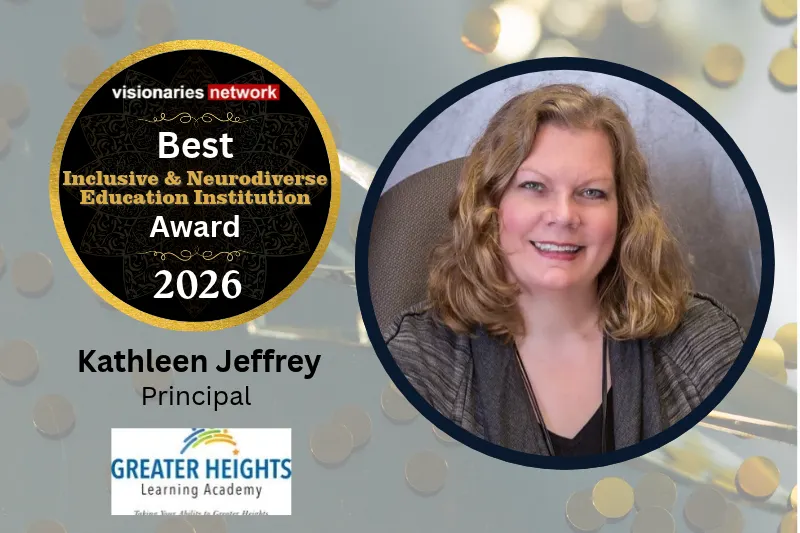
Kathleen Jeffrey, Principal of Greater Heights Learning Academy, has led the academy for 23 years, bringing extensive experience in specialized K–12 and inclusive education. She holds a BAA, BA, BA, BEd, and a Master of Arts in Educational Psychology from Simon Fraser University (SFU).
Her career includes developing modified and adapted K–12 special education curricula, customized literacy strategies, and inclusive classroom practices. From 2006 to 2018, she worked with the BC Ministry of Education, contributing to the Special Education Committee before serving as a Lead School Inspector and Auditor.
Jeffrey authored Bridging to Enrichment, appeared in a documentary on Lev Vygotsky, and worked alongside Professor Reuven Feuerstein in Israel. She has presented workshops and research across Canada, the United States, and Europe, including at Russian State University in Moscow, as well as summer sessions at Cal State Fullerton and the University of Washington.
Today, GHLA serves neurodiverse students across 13 Lower Mainland municipalities and has supported more than 800 students during Jeffrey's tenure. The school also aims to make specialized education more accessible to families from different financial backgrounds.
At the heart of GHLA's work is a simple belief: a child's learning differences should not determine how far they can go. The school creates the support, flexibility, and opportunities students need to develop their strengths and move forward with confidence.
“Rather than expecting every student to adapt to a single way of learning, GHLA begins with the individual, creating the support and flexibility needed for meaningful progress.”
FAQs about GHLA
1. What is Greater Heights Learning Academy (GHLA)?
GHLA is a specialized K–12 school for neurodiverse students, combining individualized education, therapeutic support, and mediated learning in one environment.
2. How does GHLA support individual learning needs?
The school uses individualized education plans, small classes, accommodations, assistive technology, and personalized strategies to support each learner’s needs.
3. What therapeutic services does GHLA offer?
GHLA has Occupational Therapists, Speech-Language Pathologists, Physiotherapists, Counsellors, and Music Therapists who work alongside the educational team.
4. How does GHLA promote emotional safety?
The school uses visual schedules, predictable routines, sensory reset spaces, calm communication, and de-escalation strategies to help students manage stress and change.
5. What educational pathways are available at GHLA?
Students can work toward the BC Dogwood Diploma or School Completion Evergreen Certificate, with modified programs that may include life skills and independent living.
Browse our most recent publications