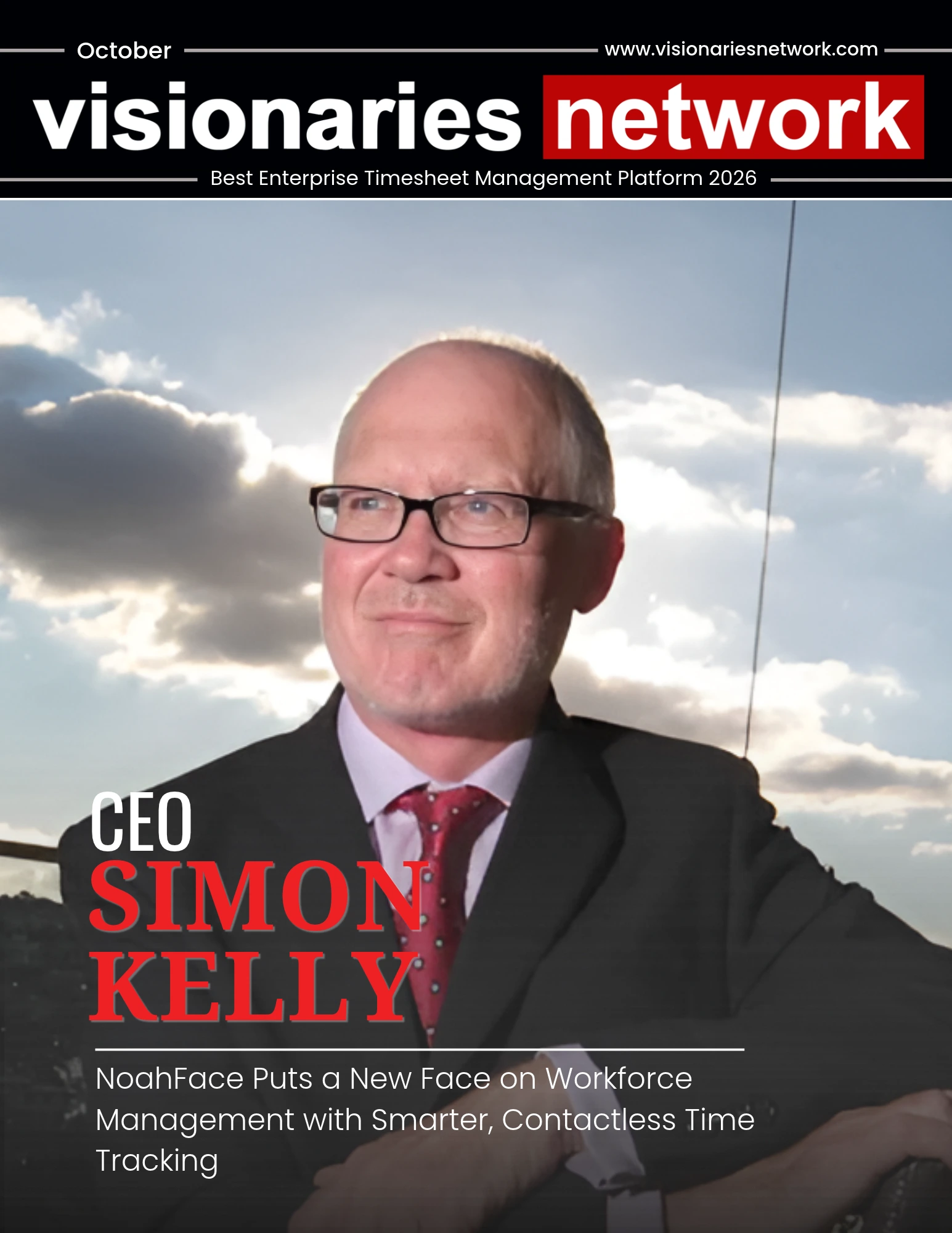
From Timesheets to Connected Workflows: The Evolution of HMS Software’s TimeControl

Published: 2026-10-12 | Author: VisionariesNetwork Team
Few areas of business technology have changed as dramatically as project and timesheet management. When HMS Software began developing solutions in 1984, personal computers were only starting to enter the workplace. Since then, the way organizations capture, manage, and share information has been reshaped by networking, enterprise databases, Windows, and the internet.
HMS Software has been part of that evolution from the beginning. The company launched TimeControl in 1994 as a project and timesheet management platform and has continued to adapt it as workplace technology advanced. Over the years, TimeControl evolved from DOS and Windows environments to client-server systems and browser-based software. HMS was also among the early companies to bring a browser interface to an enterprise product, reflecting its focus on keeping business systems aligned with changing technology.
Today, TimeControl is available as both an on-premise solution and a Software as a Service subscription. Its capabilities now include a mobile app, multiple security and authentication options, and a bidirectional API. Yet beneath these technological developments, its purpose remains remarkably consistent: helping organizations manage their time effectively while connecting that information with the wider systems that support their operations.
That combination of longevity and continued evolution has become a defining part of HMS Software’s approach, allowing the company to remain focused on the same business need while continually adapting to the way organizations work.
Where TimeControl Began: Solving a Problem Others Had Overlooked
The origins of TimeControl can be traced to one of HMS Software’s earliest projects. In 1984, a large multinational manufacturing company approached HMS to select and implement a project management system. It also needed a timesheet solution that could connect project progress with payroll.
No product at the time could address both requirements, so HMS built one.
What began as a response to a specific customer need revealed a broader challenge in the workplace. Project managers need visibility into tasks, hours, and progress, while payroll teams require accurate records that can be reviewed and audited. Their processes and reporting requirements may differ, yet both depend on the same underlying information.
HMS built its system around that reality, while keeping timesheet entry simple for employees. That thinking would later become central to TimeControl.
Even today, organizations often maintain separate timesheets for project management, payroll, billing, HR, or compliance. In some cases, employees may have to enter the same information into several systems. TimeControl is designed to bring those processes together, allowing one timesheet to serve multiple business needs and reducing the repetitive work involved in maintaining separate records.
One Source of Time Data, From Office to Field
Managing time and project costs is ultimately about more than software. It is about bringing different parts of an organization together around the same information.
A project team may be focused on progress and costs. Payroll needs accurate records. HR may require employee data, while compliance teams need a reliable audit trail. When these groups operate through disconnected processes, even a straightforward timesheet can become a source of duplication and inconsistency.
TimeControl provides a common foundation for these requirements. The same time data can support project tracking, payroll, invoicing, and compliance, giving different departments access to information relevant to their work without creating additional entry for employees.
That need becomes even more pronounced outside the office. In construction, engineering, EPC, heavy maintenance, and other industrial environments, employees and supervisors may spend most of their working day in the field. Time and project information may need to be recorded several times during a shift, often under conditions very different from those of an office environment.
This led HMS to develop TimeControl Industrial, designed specifically for field-intensive operations. The platform can capture information relating to labor, materials, equipment, production, and physical project progress.
Field environments also bring their own complications. Union rates may need to be applied, contractor supervisors may be responsible for approvals, and internet connectivity can be unreliable at remote locations. Mobile access with offline capability therefore becomes more than a convenience. It becomes an operational requirement.
TimeControl Industrial is built with these conditions in mind, allowing organizations to capture and manage information where the work actually takes place.
Connecting the Systems Behind the Work
For most organizations, introducing a new platform does not mean starting from scratch. Existing project management, financial, HR, and enterprise systems remain central to daily operations. For HMS Software, integration has therefore been an important part of TimeControl’s development.
The platform works with systems from companies including Microsoft, Oracle, InEight, Brightwork, and Birdview. These relationships also give HMS insight into the evolving technologies and platforms its customers depend on.
But meaningful integration involves more than simply connecting two systems. Project information may need to move in both directions, allowing task progress and timesheet data to remain aligned. HMS works with customers to make those connections fit within their existing project management environments rather than forcing organizations to rebuild the way they already operate.
That practical mindset also extends to HMS’s internal teams. Developers, testers, support staff, and deployment specialists gain experience across different areas of the product and customer experience. This creates a broader understanding of how TimeControl works in real-world environments.
For customers, that can mean reaching someone who understands both the technical issue and the business context behind it, without necessarily having to move a problem through multiple layers of support. It also allows HMS employees to bring direct customer experience back into the continued development of the platform.
|
Designed for Today’s Enterprise, Ready for What Comes Next |
TimeControl is designed to accommodate organizations at different stages of growth. For a smaller team, flexibility may be the priority. For a large enterprise, controlling access to information can become considerably more complex.
Through User Profiles, administrators can control access down to the field level while also managing menus, reports, and other elements of the system. This becomes particularly valuable in organizations with thousands or tens of thousands of users, where employees may need access to very different information depending on their roles.
The objective is not simply to give users access to more information, but to give them access to the information they actually need.
As technology continues to reshape project management and business operations, HMS is looking ahead to the next stage. Faster communication between systems and greater automation are becoming increasingly important, with AI now adding another dimension to the conversation.
HMS does not expect the traditional timesheet to disappear. In many organizations, time records remain an important source of information for payroll, invoicing, HR, Sarbanes-Oxley, DCAA, research and development, and other compliance requirements. Even as surrounding processes become more automated, those records may still need to be reviewed, verified, and retained.
The company is continuing to expand its automation capabilities and is preparing TimeControl to be AI Agent Enabled. At the same time, HMS is growing deliberately, with an expanding team, further growth planned for 2027, and a new, larger workspace secured through a recent lease.
Its product roadmap is moving forward as well, including continued development of TimeControl and the new TimeControl Project product, which is expected to receive a major update in the new year.
More than four decades after its first project, HMS Software continues to build around a principle that has remained remarkably consistent: technology should evolve with the way organizations work, while the systems businesses depend on should remain stable, practical, and connected.
“After more than four decades, HMS Software continues to evolve TimeControl around one enduring principle: technology should adapt to the way organizations work, not the other way around.”
FAQs about HMS Software
1. What is TimeControl by HMS Software?
TimeControl is a project and timesheet management platform that connects time data with project tracking, payroll, invoicing, HR, and compliance.
2. How does TimeControl reduce duplicate timesheet entry?
A single timesheet can support multiple business processes, reducing the need for employees to enter the same information into different systems.
3. What is TimeControl Industrial designed for?
It is designed for field-intensive industries such as construction, engineering, EPC, and heavy maintenance, including environments with limited connectivity.
4. Can TimeControl integrate with other business systems?
Yes. TimeControl integrates with systems from companies including Microsoft, Oracle, InEight, Brightwork, and Birdview, helping keep project and timesheet data aligned.
5. How is HMS Software preparing TimeControl for the future?
HMS is expanding automation capabilities and preparing TimeControl to be AI Agent Enabled, while continuing to focus on integration, scalability, and reliable time management.
Browse our most recent publications