
Amy Vetter and The B³ Method Institute: Where Business Performance Meets Human Fulfillment
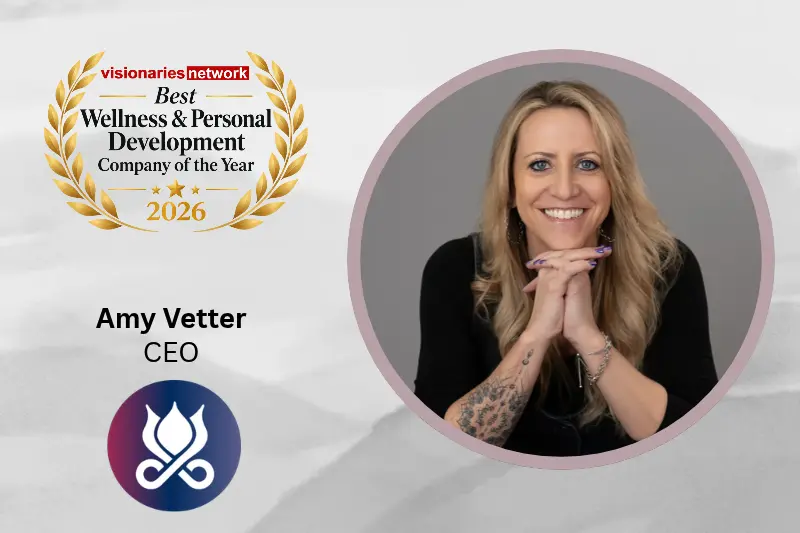
Published: 2026-09-30 | Author: VisionariesNetwork Team
Artificial intelligence is changing the workplace at an extraordinary pace. Organizations are adopting new technologies to automate processes, improve productivity, and make better use of data. Yet as AI reshapes the way people work, another question is becoming increasingly important: how can organizations keep their people connected, engaged, and fulfilled while navigating constant change?
Amy Vetter, keynote speaker, CPA, Yogi, and CEO of The B³ Method Institute, brings a human-centered perspective to this challenge. Through her B³ Method®—Business + Balance = Bliss—and Fulfillment ROI® measurement system, she helps individuals and organizations understand how personal well-being can contribute to sustainable business success.
Her work sits at the intersection of business performance and human fulfillment, encouraging leaders to look beyond productivity alone and consider the conditions that allow people to perform, connect, and thrive.
Connecting Business Success With Human Fulfillment
Amy's professional background gives her a distinctive understanding of both business and personal well-being. As a CPA, she has spent years working with the principles of business, financial performance, and organizational success. As a Yogi and registered yoga teacher, she brings another perspective centered on mindfulness, presence, and balance.
The B³ Method® connects these experiences through a simple philosophy: Business + Balance = Bliss.
For Amy, balance does not mean stepping away from ambition or lowering professional expectations. Instead, it involves becoming more intentional about how people approach their work and lives. By reconnecting with their authentic selves, interests, creativity, and personal values, professionals can create a stronger relationship between fulfillment and performance.
Her keynotes bring these ideas to life through interactive experiences rather than relying solely on traditional presentations. Live violin performances, yoga, mindfulness exercises, and practical activities can become part of the experience, giving audiences opportunities to pause, reflect, and engage with the concepts being discussed.
Preparing People for Work in the Age of AI
AI is among the most requested topics for business audiences heading into 2026, but Amy approaches the subject from a perspective that goes beyond technology itself. As organizations introduce AI into everyday workflows, employees are also dealing with questions around changing responsibilities, job security, productivity expectations, and the future of their roles.
Amy's keynote From Transactional to Transformational: Aligning Human Connection, AI, and Strategy explores how organizations can respond to these changes while maintaining the human qualities that contribute to long-term success.
Her approach emphasizes that AI can create new opportunities rather than simply eliminate work. By giving people more time through automation and technology, organizations can potentially create greater space for strategic thinking, creativity, meaningful relationships, and communication.
The challenge is ensuring that this additional capacity is used intentionally.
For Amy, authentic human connection becomes increasingly valuable as technology takes on more transactional responsibilities. Creativity, presence, emotional awareness, collaboration, and the ability to build trust remain important parts of effective organizations.
Measuring the Value of Fulfillment
Amy's Fulfillment ROI® framework takes her philosophy a step further by examining the connection between fulfillment and measurable organizational outcomes.
Her keynote, Fulfillment ROI®: The Hidden Secret to Profitability, Employee Engagement, & Customer Loyalty, focuses on the human factors that influence performance and organizational culture.
Amy explores what she describes as a hierarchy of fulfillment, helping leaders identify psychological patterns that can contribute to disengagement and burnout. The approach is particularly relevant for organizations seeking to retain experienced and high-performing employees while creating an environment where people can continue to innovate.
Rather than positioning employee fulfillment simply as a workplace benefit, the framework connects it with broader organizational priorities such as productivity, engagement, profitability, revenue, customer relationships, and employee retention.
This creates a different way of thinking about workplace culture: one where human well-being and business performance can be considered together rather than as competing priorities.
Helping Professionals Disconnect to Connect
Technology has made it easier than ever to remain connected, but constant connectivity can also make it difficult for people to be fully present.
Amy addresses this challenge in Disconnect To Connect: Practicing Mindfulness In The Workplace. Drawing from her experience as a CPA and yoga instructor, she introduces practical techniques that professionals can incorporate into their working day.
Desk meditation, breathwork, chair yoga, and healthy time boundaries form part of the session. These practices are designed to help individuals manage distractions, restore energy, and become more intentional about how they engage with colleagues and responsibilities.
A central concept in Amy's work is "taking a beat." Creating a small pause between stimulus and response can provide an opportunity to become more aware of one's thoughts, reactions, and choices.
In a workplace where communication can happen instantly and demands can arrive continuously, that pause can become a meaningful leadership and productivity practice.
Developing More Connected Leaders
Leadership is another important part of Amy's work. In The Connected Leader: Why Your Team's Success Starts With Yours, she explores how leaders can strengthen communication and relationships by first becoming more intentional about their own behavior.
Effective leadership requires more than managing tasks. Leaders must listen, communicate clearly, establish trust, and create an environment where people feel comfortable contributing.
Amy's approach emphasizes active listening, authentic communication, healthy boundaries, and self-leadership. The idea is that leaders who are more aware of their own energy, habits, and communication patterns can create stronger connections with their teams.
As AI gives leaders and employees new opportunities to save time, Amy encourages organizations to consider how that time can be redirected toward activities that create meaningful value.
Changing Habits to Create Lasting Change
Amy's Change Your Habits To Change Your Life keynote examines another important part of transformation: the patterns individuals carry with them.
People often recognize recurring feedback or situations in their professional and personal lives but may find it difficult to change the behaviors contributing to those patterns. Amy encourages audiences to begin by identifying these habits and examining the beliefs behind them.
Through the B³ Method®, participants explore how changing one habit can create a positive ripple effect across other areas of life.
This approach reinforces one of the broader principles behind Amy's work: meaningful transformation can begin with small, intentional changes rather than overwhelming attempts to change everything at once.
Finding Joy and Purpose in Work Again
Amy's Business + Balance = Bliss: Find Joy in Your Work and Life Again keynote brings many of these ideas together.
For professionals who feel trapped in mechanical routines or disconnected from work they once found meaningful, the session focuses on reconnecting with authenticity, creativity, and personal interests.
Amy encourages audiences to consider what makes them uniquely valuable and how they can bring more of those qualities into their professional lives. Technology may automate certain tasks, but it does not eliminate the value of human creativity, individuality, curiosity, or connection.
Through interactive exercises and experiences such as live violin performance, Amy demonstrates how intentional pauses can help people become more present and rediscover elements of their work and lives that may have been overlooked.
Building Sustainable Success Through Balance
The B³ Method Institute reflects Amy Vetter's belief that business performance and human fulfillment do not have to exist on opposite sides of the equation.
As organizations move deeper into the age of AI, technology will continue to influence how work is performed. But sustainable success will still depend on people who can communicate, collaborate, create, adapt, and build meaningful relationships.
Amy's work provides organizations with a framework for considering those human dimensions alongside traditional measures of performance. From mindfulness and leadership to Fulfillment ROI® and AI strategy, her approach encourages professionals to pause, reconnect, and become more intentional about the way they work.
At the heart of her message is a straightforward idea: when people are given the opportunity to bring greater balance, authenticity, and connection into their work, business success can become more sustainable.
“Sustainable success is not just about what technology can accomplish; it is about helping people stay connected, fulfilled, and human as the workplace evolves.”
Frequently Asked Questions
1. Who is Amy Vetter?
Amy Vetter is a keynote speaker, CPA, Yogi, and CEO of The B³ Method Institute. She works with organizations on leadership, workplace mindfulness, fulfillment, human connection, and sustainable business success.
2. What is the B³ Method®?
The B³ Method® stands for Business + Balance = Bliss. It is Amy Vetter's methodology for connecting professional success with personal balance, authenticity, and fulfillment.
3. What is Fulfillment ROI®?
Fulfillment ROI® is Amy's framework for examining how employee fulfillment and well-being can connect with organizational outcomes such as engagement, productivity, profitability, and customer loyalty.
4. How does Amy address AI in her keynotes?
Amy explores how organizations can navigate AI-driven workplace changes while maintaining human connection, creativity, communication, and employee fulfillment.
5. What makes Amy's keynote presentations interactive?
Depending on the keynote, Amy incorporates experiences such as live violin performance, mindfulness exercises, breathwork, yoga, and interactive activities to help audiences engage with the subject matter.
Browse our most recent publications