Spatial AI Is Giving Machines a Better Understanding of the World
Latest Updates


visionaries Network Team
01 October, 2026
ai vr and automation
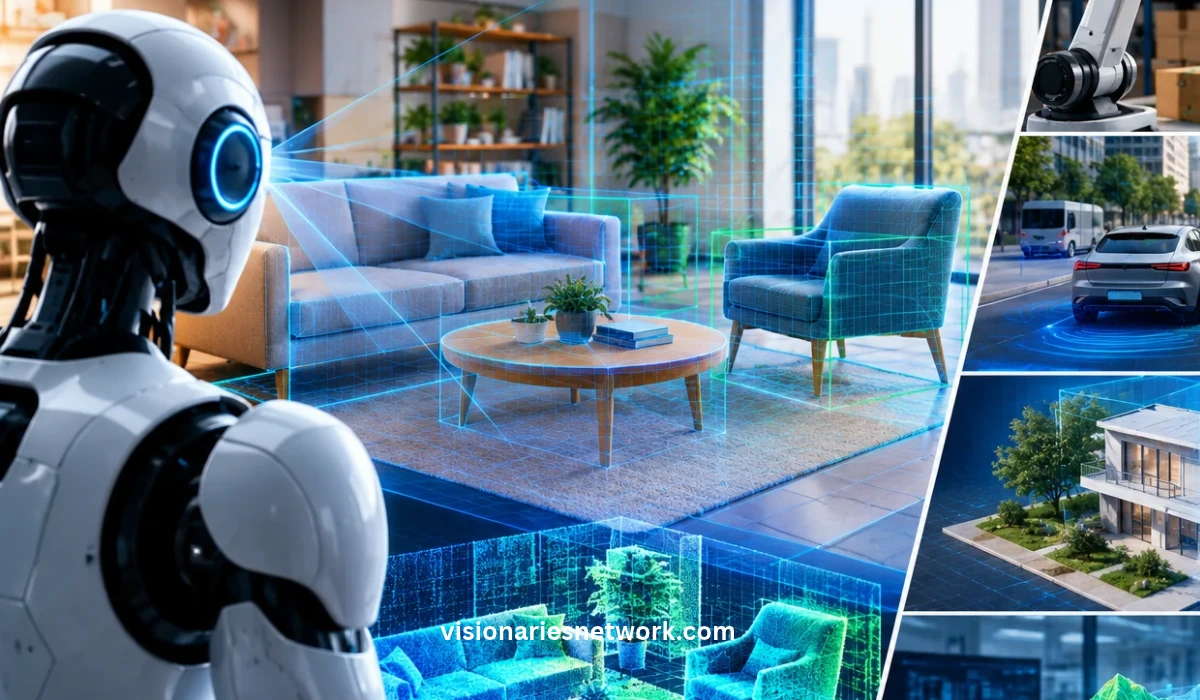
Artificial intelligence has become remarkably capable of working with language, images, and large amounts of information. The next step is helping machines understand the spaces in which people live and work. This is where spatial AI is gaining attention. Instead of simply identifying an object in an image, these systems can work with information about position, distance, movement, depth, and relationships between objects.
The technology is becoming important across robotics, autonomous systems, 3D creation, simulation, and other applications where understanding the physical environment matters. It could give machines a more useful picture of the world before they make decisions or perform tasks.
Giving Machines a Sense of Space
A camera can tell a machine that a chair is in front of it. Spatial technology aims to provide much more context. It can help an intelligent system understand where the chair is located, what is around it, and how the surrounding environment is structured.
This capability is closely connected to spatial intelligence, which involves understanding the structure and behavior of environments. World Labs is developing AI models around this concept. According to World Labs, its models are designed to perceive, generate, reason about, and interact with virtual and physical worlds.
World Labs describes world models as a foundation for spatial and physical intelligence. Its Marble product can create persistent 3D worlds from inputs including images, video, text, and 3D layouts. This gives businesses and developers a way to work with environments that go beyond conventional flat images.
The development is significant because physical environments contain information that ordinary text-based AI cannot fully capture. A machine operating in a room, warehouse, road, or factory needs to understand relationships between objects rather than simply recognize individual items.
AI Perception Builds a Richer Picture
Another important element is AI perception. Intelligent machines need ways to collect and interpret information from cameras, depth sensors, lidar, and other sources.
Consider a robot moving through a warehouse. Identifying a package is only the beginning. The robot needs to understand where the package is, how far away it is, whether something is blocking the route, and how nearby objects or people could affect its movement.
Research from NVIDIA demonstrates how much attention is being given to this problem. Its RoboSpatial project was created to improve spatial understanding in vision-language models used for robotics. The dataset contains 1 million images, 5,000 3D scans, and 3 million annotated spatial relationships. NVIDIA reports that models trained with RoboSpatial performed better on tasks such as spatial relationship prediction and robot manipulation.
The research can be explored through NVIDIA's RoboSpatial project, which provides details of the dataset and its role in robotics.
This illustrates an important point about AI perception. Machines need more than visual recognition. They need information that helps them understand how objects relate to one another within an environment.
World Models Connect Perception with Action
World models are becoming another important part of this technology. These systems attempt to represent environments and model how they look, behave, and change over time.
In September 2026, World Labs introduced Atlas, a world model designed specifically around spatial intelligence. According to the company's Atlas announcement, the system can work with text, images, video, and 3D information within a shared spatial context.
Atlas can reconstruct real-world scenes from images and produce 3D outputs. World Labs also describes space-time simulation capabilities that can support real-to-sim workflows for robotics.
This is where AI spatial intelligence becomes particularly interesting. A machine could potentially use its understanding of an environment to anticipate what might happen next, rather than responding only to what it sees at the current moment.
For robotics, that distinction matters. A robot picking up an object needs to understand not only the object's current position but also how the object, its surroundings, and the robot itself may move during the task.
Robotics Provides a Real-World Test
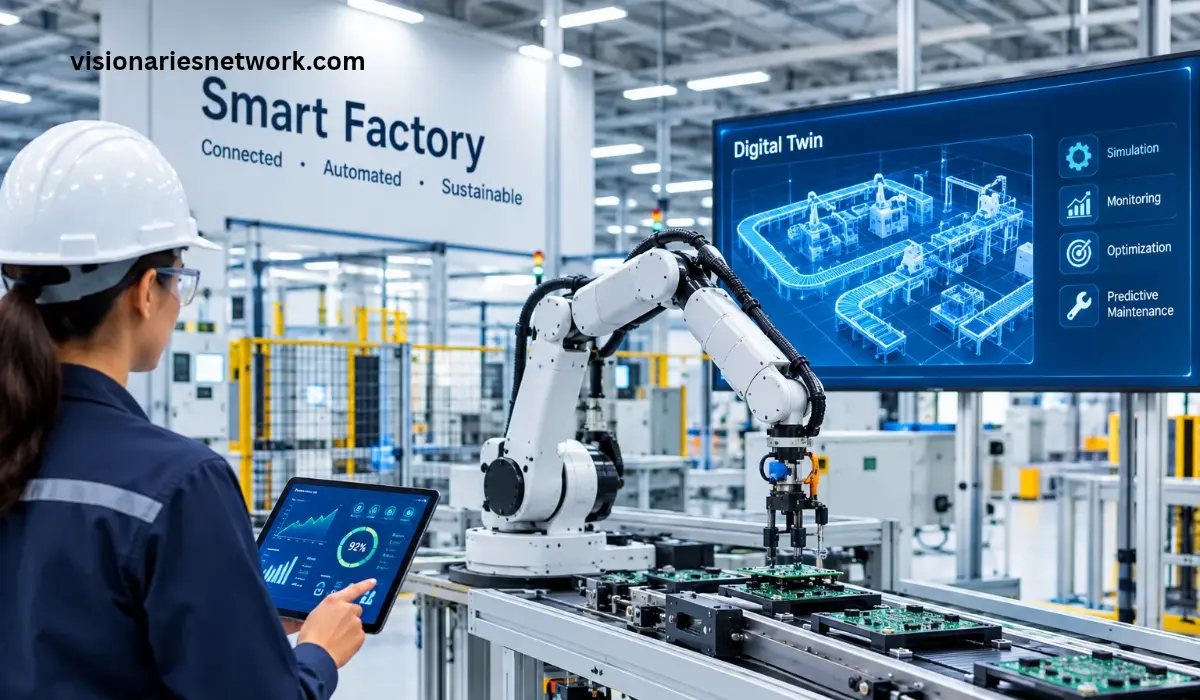
Robotics is one of the clearest areas where spatial AI can demonstrate its value. Physical machines must operate in environments that can change from one moment to the next.
A warehouse robot may encounter a package that was moved from its expected location. A service robot could find a person standing in its path. An autonomous machine may need to respond to an obstacle that was not present when its route was planned.
NVIDIA's Spatial Intelligence Lab is working on technologies that enable AI systems to perceive, model, and interact with the physical world. Its research includes areas such as neural 3D reconstruction, world simulation, autonomous-vehicle simulation, and interactive world models. More details are available through the NVIDIA Spatial Intelligence Lab.
World Labs is also connecting spatial intelligence with robotics. In July 2026, the company announced its acquisition of SceniX, describing robotics as an area where spatial intelligence becomes physical. The company said its approach brings together spatial intelligence, world models, learning-based simulation, and real-world learning.
These developments show how spatial computing AI can extend beyond digital environments. Instead of treating a computer as a system that only processes information on a screen, spatial computing connects digital intelligence with three-dimensional environments.
Applications Extend Beyond Robotics
Robotics may be one of the most visible applications, but the technology has a much broader reach.
Three-dimensional understanding can support architectural visualization, product design, autonomous vehicles, simulation, entertainment, scientific research, and virtual environments. Developers can use generated or reconstructed spaces to test ideas before applying them in the real world.
World Labs' Marble is one example. The company says the platform can create spatially consistent 3D worlds from text, images, video, or 3D layouts. Users can move through, edit, expand, and combine these environments.
This kind of technology could eventually make 3D environments easier to create and modify. Instead of constructing every digital space manually, designers and developers could provide different forms of input and allow AI systems to generate a starting environment.
There are still challenges. Physical environments are unpredictable, sensors can provide incomplete information, and AI systems need to make reliable decisions when conditions change. Computing requirements and the quality of training data are also important considerations.
Even so, the direction is becoming clearer. AI is moving from systems that primarily understand information toward systems that can build richer representations of the environments around them. As that capability develops, spatial AI could become an important part of how intelligent machines see, reason, simulate, and interact with the world.
FAQs
1. What is spatial AI?
Spatial AI is artificial intelligence designed to understand physical or virtual environments. It can work with information about objects, locations, distances, movement, depth, and relationships between elements in a space.
2. How does spatial intelligence help machines?
Spatial intelligence helps machines build a better understanding of their surroundings. This can support navigation, object manipulation, simulation, planning, and interaction with physical environments.
3. What is AI perception?
AI perception refers to the ability of an AI system to interpret information collected through cameras, lidar, depth sensors, and other sources. In robotics, perception helps machines understand their surroundings before taking action.
4. How is spatial AI being used in robotics?
Spatial AI can help robots understand their surroundings, recognize relationships between objects, navigate environments, and plan physical actions. Research such as NVIDIA's RoboSpatial project is focused on improving these capabilities.
5. What is the connection between spatial AI and world models?
World models can represent and simulate environments, giving AI systems a way to reason about space and how it changes. Technologies such as World Labs' Atlas demonstrate how world models can combine spatial understanding with generation, reconstruction, and simulation.
About the Company
Visionaries Network is a business PR and media platform that helps companies and leaders strengthen their visibility, credibility, and growth through strategic storytelling and media exposure.
Browse our most recent publications