Private Cellular Networks Are Changing Industrial Connectivity
Latest Updates





visionaries Network Team
05 October, 2026
telecommunication and electronics
Factories depend on a lot of connected equipment. Machines, scanners, cameras, sensors and mobile devices all need a reliable connection. In a large plant, keeping everything connected can be difficult, especially when equipment is spread across different areas.
A private cellular network gives a company its own mobile network for a particular site. It can be used inside a factory, warehouse, mine, port or other industrial location. The network is separate from the public mobile network and can be set up around the needs of that site.
The Global mobile Suppliers Association has been tracking private mobile networks across different industries. Its private mobile networks research shows that industrial businesses are among the organizations looking at this type of connectivity.
A Factory Is Not an Office
A factory floor has very different conditions from an office. There may be large machines, metal structures, moving vehicles and production lines operating throughout the day. A wireless signal that works well in an office may not provide the same results in a large industrial building.
A private cellular network can help cover a wider area and keep devices connected as they move around the site.
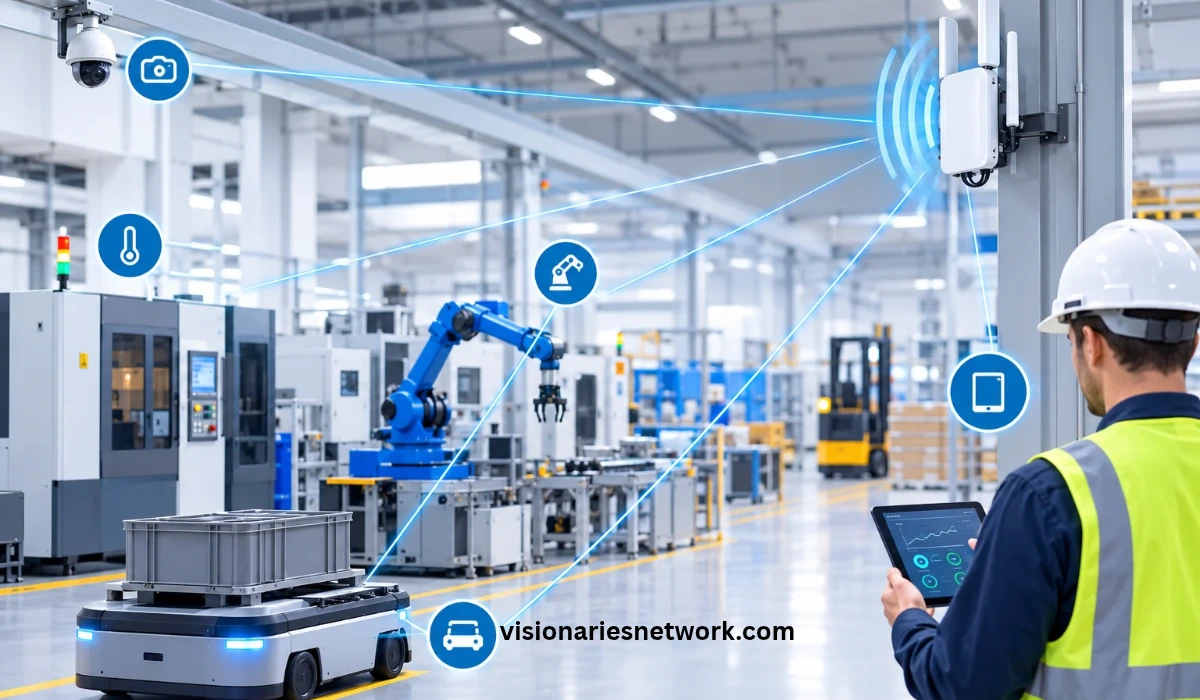
For example, a factory could use the network for:
The GSMA has also examined how connectivity is being used in factories. Its information on connected manufacturing covers the use of mobile technology across industrial operations.
Where 5G Fits into Manufacturing
5G is useful when a factory has equipment that needs a fast and dependable wireless connection. It can also be useful when devices are moving around the site.
This is one reason 5g manufacturing is being discussed by manufacturers and technology companies. The technology can support applications where machines, sensors and other equipment need to exchange information without relying on physical network cables.
A simple example is an automated vehicle carrying materials between two parts of a factory. It needs to remain connected while it moves. Cameras and sensors can also send information to systems that monitor production.
The GSMA has published examples and information about 5G manufacturing, including work taking place in industrial environments.
But 5G is not automatically the answer for every factory. A company first needs to look at what its existing network can handle.
Sensors Add More Traffic
Modern factories can have a large number of sensors. One machine may have sensors checking temperature, vibration, pressure or other conditions. Multiply that across a production floor and the amount of connected equipment can become quite large.
This is where industrial 5G can be considered. A factory can use cellular connectivity for devices that need to communicate across the site.
It can also help when equipment needs to stay connected while moving. This can be useful for automated vehicles, mobile robots and other equipment that does not remain in one place.
Ericsson has also studied connectivity in manufacturing. Its manufacturing industry research looks at how communication technology is being used by manufacturers.
The network itself is only one part of the job. Companies also have to manage the devices using it and decide who or what should have access to different systems.
Not Every Factory Needs a New Network
There is a practical side to the decision. A company with a small facility and a limited number of connected machines may not need a private cellular network. Existing Wi-Fi or wired connections might be enough.
A large manufacturing plant with mobile equipment, many sensors and demanding connectivity requirements is a different case.
Before making a decision, a manufacturer can look at:
This matters when considering 5g for manufacturing. The technology should solve a real network problem rather than simply be added because it is newer.
A Choice for Larger Industrial Sites
Factories are using more connected equipment, but every site has different requirements. Some need better coverage. Others need reliable connections for mobile equipment. Some may simply need to improve the network they already have.
Private cellular networks give industrial companies another way to handle these requirements. For a large factory, the ability to manage connectivity across the whole site can be useful.
The decision still comes down to the individual operation. If the existing network works well, there may be little reason to replace it. If connectivity problems are affecting machines, workers or production systems, a private cellular setup may be worth considering.
Frequently Asked Questions
1. What is a private cellular network?
It is a cellular network designed for use by a specific company, facility or organization rather than the general public.
2. How can factories use private cellular networks?
They can connect machines, sensors, cameras, automated vehicles, scanners and other devices across the facility.
3. Is 5G useful for manufacturing?
It can be useful for factories that need reliable wireless connections for mobile equipment, sensors, cameras and other connected systems.
4. Does every factory need private 5G?
No. Some factories may already have a network that meets their needs. The decision depends on the size of the site and its connectivity requirements.
5. What should a company check before installing one?
It should consider coverage, the number of devices, equipment movement, security, existing infrastructure and the cost of running the network.
About the Company
Visionaries Network is a Business PR & Media Solutions platform that helps companies and business leaders gain visibility through industry-focused content, media coverage, digital publishing, and print publications.
Browse our most recent publications