Huawei Chip Queen He Tingbo Unveils New Semiconductor Path as Huawei Advances Post-Moore’s Law Strategy
Latest Updates






visionaries Network Team
26 May, 2026
semiconductors
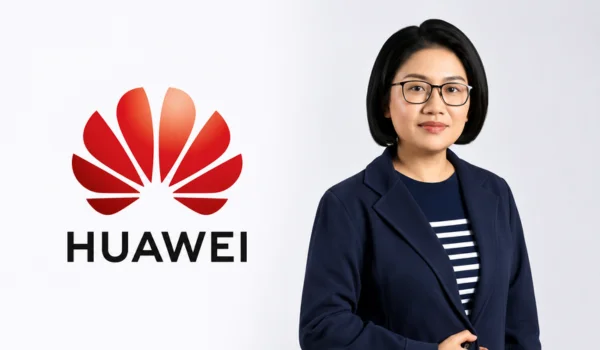
Huawei chip queen He Tingbo new semiconductor path is gaining global attention after the senior executive introduced a new chip development strategy aimed at reshaping the future of semiconductors. Speaking at the IEEE International Symposium on Circuits and Systems in Shanghai, He Tingbo outlined Huawei’s latest direction as the company strengthens its chip ambitions amid continued U.S. sanctions.
He Tingbo, president of Huawei’s semiconductor business, introduced Huawei’s Tau Scaling Law, a principle designed to guide post-Moore’s Law semiconductor development in China as traditional transistor shrinking becomes less effective.
For decades, Moore’s Law helped improve computing by packing more transistors onto chips. But as the industry approaches physical limits, Huawei says performance gains must increasingly come from improving transmission speeds across devices, circuits, chips, and computing systems.
Huawei Pushes New Chip Strategy as China Expands Semiconductor Independence
Huawei said its teams have spent the past six years applying the Tau Scaling Law and have already mass-produced 381 chips based on the approach.
The announcement highlights Huawei’s growing role in China self-reliant semiconductor technology development as the country invests heavily in domestic chip innovation.
That focus became more urgent after U.S. sanctions in 2019 restricted Huawei’s access to key foreign semiconductor technologies and advanced manufacturing.
Huawei’s latest chip strategy reflects the broader global race to find alternatives to traditional semiconductor scaling while supporting demand from artificial intelligence, telecom, and cloud computing.
He Tingbo Continues Leading Huawei’s Semiconductor Growth
Born in Changsha in 1969, He Tingbo joined Huawei in 1996 and helped build HiSilicon, Huawei’s chip design division, into one of the company’s most important businesses.
Under her leadership, Huawei expanded into AI processors, telecommunications chips, networking hardware, and consumer electronics—contributing to Huawei’s 2025 revenue of 880.9 billion yuan.
He also became a symbol of Huawei’s response to sanctions after a widely shared 2019 letter described HiSilicon as a “backup lifeline for Huawei and for the whole country.”
With Huawei post-Moore’s Law chip strategy in China moving forward, He Tingbo remains a key figure in the next phase of semiconductor innovation.
FAQs
1. Who is Huawei chip queen He Tingbo?
He Tingbo leads Huawei’s semiconductor business and is one of the company’s most senior executives.
2. What is Huawei’s Tau Scaling Law?
It is Huawei’s chip development approach focused on improving transmission speeds rather than relying only on smaller transistors.
3. Why is Huawei focusing on post-Moore’s Law technology?
Because traditional transistor scaling is slowing, and new chip designs are needed to improve performance.
4. How many chips has Huawei developed using this strategy?
Huawei says it has mass-produced 381 chips using Tau Scaling Law.
5. Why is He Tingbo important to China’s chip industry?
She plays a major role in China self-reliant semiconductor technology development and Huawei’s semiconductor expansion.
Browse our most recent publications