Chinese AI Startup Publishes AI Satellite Imagery of US Military Bases, Raising Global Security Concerns
Latest Updates






visionaries Network Team
09 March, 2026
startups
Chinese startup MizarVision releases AI satellite imagery of US military bases across the Middle East, raising global security concerns over AI-powered intelligence and modern warfare
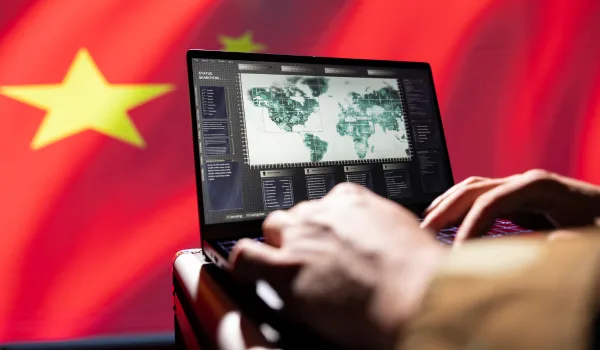
A Chinese artificial intelligence startup has drawn worldwide attention after publishing detailed satellite images showing United States military deployments across the Middle East. The release of AI satellite imagery of US military bases has triggered debate among security experts about how commercial technology and artificial intelligence could reshape intelligence gathering and modern warfare.
According to an analysis by researcher Shanaka Anselm Perera, the company MizarVision has been distributing high-resolution satellite imagery mapping American military assets throughout the region. The images reportedly identify bases, naval formations and air-defense systems using automated artificial intelligence analysis.
Perera said the imagery is “labelled, geolocated, AI-annotated and updated in near-realtime.” The posts have circulated widely on social media, including accounts linked to the People's Liberation Army and Chinese state-media channels.
Satellite images reveal regional deployments
The first major release appeared on February 20, days before the US military launched Operation Epic Fury. The imagery reportedly showed aircraft movements toward Ovda Airbase, alongside fighter deployments in Saudi Arabia and Qatar, and naval activity in the Arabian Sea.
By March 1, additional images expanded coverage to include US facilities in Jordan, Kuwait, Bahrain and the United Arab Emirates. According to Perera’s analysis, the AI system identified aircraft types, missile defence platforms and troop concentrations. One dataset reportedly catalogued around 2,500 individual military assets.
These releases have become one of the most widely discussed examples of AI satellite imagery of US military bases circulating publicly online.
Data sources behind the imagery
The analysis says the imagery comes from two primary sources. One is the Jilin-1 satellite constellation operated by Chang Guang Satellite Technology. The network includes more than 100 commercial satellites capable of producing sub-metre resolution images detailed enough to identify aircraft on runways and distinguish systems like THAAD and the Patriot missile system.
The second source includes commercially available data from Western firms such as Maxar Technologies and Airbus Defence and Space.
MizarVision processes this data using proprietary AI models that automatically identify military hardware and locations, converting raw satellite photos into searchable intelligence reports.
Pentagon response and rising concerns
The Pentagon has described the imagery as “open-source,” but analysts argue the real power lies in the automated processing layer that rapidly converts massive datasets into operational intelligence.
Perera warned that publicly shared AI satellite imagery of US military bases could theoretically be viewed by hostile actors, including networks linked to the Islamic Revolutionary Guard Corps.
Security analysts say the development reflects a broader shift already visible during the Russia–Ukraine War, where commercial satellite imagery became a key intelligence tool.
Experts now warn that AI-driven satellite analysis may become a powerful new front in global intelligence competition, allowing even small tech startups to map military activity across entire conflict zones in near real time.
Browse our most recent publications